We were pregnant! Finally, after two and a half years of marriage, we were stepping out of our DINK (double income, no kids) lifestyle and answering the question everyone had been asking since our “I Do’s”: “When are you having a baby?”
The pregnancy came without difficulty, and for the most part, I felt great. But I couldn’t shake the anxieties that lingered in the back of my mind—fears about losing the baby. I chalked it up to still grieving the loss of my dog of thirteen years. Losing her had nearly shattered me, and somehow that grief had made me hyperaware of the fragility of life, even as I carried this tiny new life inside me.
We were over the moon, eagerly anticipating our first encounter with our baby at the 12-week fetal scan. Nervous excitement bubbled inside me as we walked into the ultrasound room. Before beginning, the doctor reviewed our personal and family history. Nothing out of the ordinary popped up—except, of course, the so-called “geriatric” nature of our pregnancy. (Yes, that’s the term used for pregnancies over 35.) She went on to outline some potential complications, naming the worst-case scenarios, Trisomy 13 and 18, but ended with a reassuring, “But I don’t think we’ll have to worry about that. Let’s go meet your baby!”
At first, everything seemed perfect. The heartbeat on the Doppler was strong, and as the ultrasound wand moved over my belly, I caught my first glimpses of our little one. I remember staring in awe as his body began to take shape. Seeing this tiny human developing inside me felt nothing short of magical.

But soon, the tech’s voice shifted. “I’m just not getting a good angle,” she said, followed by, “I think we’re going to try intravaginally for a better look.” Naively, I didn’t think much of it—after all, it was still so early in the pregnancy. I assumed it was normal, that they just needed better visuals. When the doctor was called in, I should have realized something was wrong, but I was still captivated by the miracle before me.
After the scan, the doctor said gently, “Go ahead and get dressed, and then meet me in my office. I have a few concerns.” I remember thinking, maybe it was something minor, like a heart murmur or perhaps Down syndrome. I couldn’t imagine anything worse. I had always been healthy—like, eats kale daily, healthy—and I truly believed starting a family would be a joyful, uncomplicated journey.

Sitting across from our doctor, she began carefully: “Do you remember some of the more complex, worst-case scenarios we discussed before your ultrasound? I think we’re facing one of those.” I froze. Shock is the only word for it. My mind scrambled for a response. She explained that our baby didn’t have a pronounced jawline. My first thoughts were of procedures, of ways to “fix” this after birth. Surely there had to be something we could do.
But then reality hit harder. Jennifer, she said, addressing me directly, as if trying to shake me from disbelief. They weren’t seeing lower arms, legs, hands, or feet—nothing below the elbows and knees. There was a cyst on his brain, and they weren’t sure if he had a stomach. My heart sank further with each anomaly. Time seemed to slow. His heart was strong, the bladder full, kidneys and arteries functioning, skull intact—but everything else was uncertain.
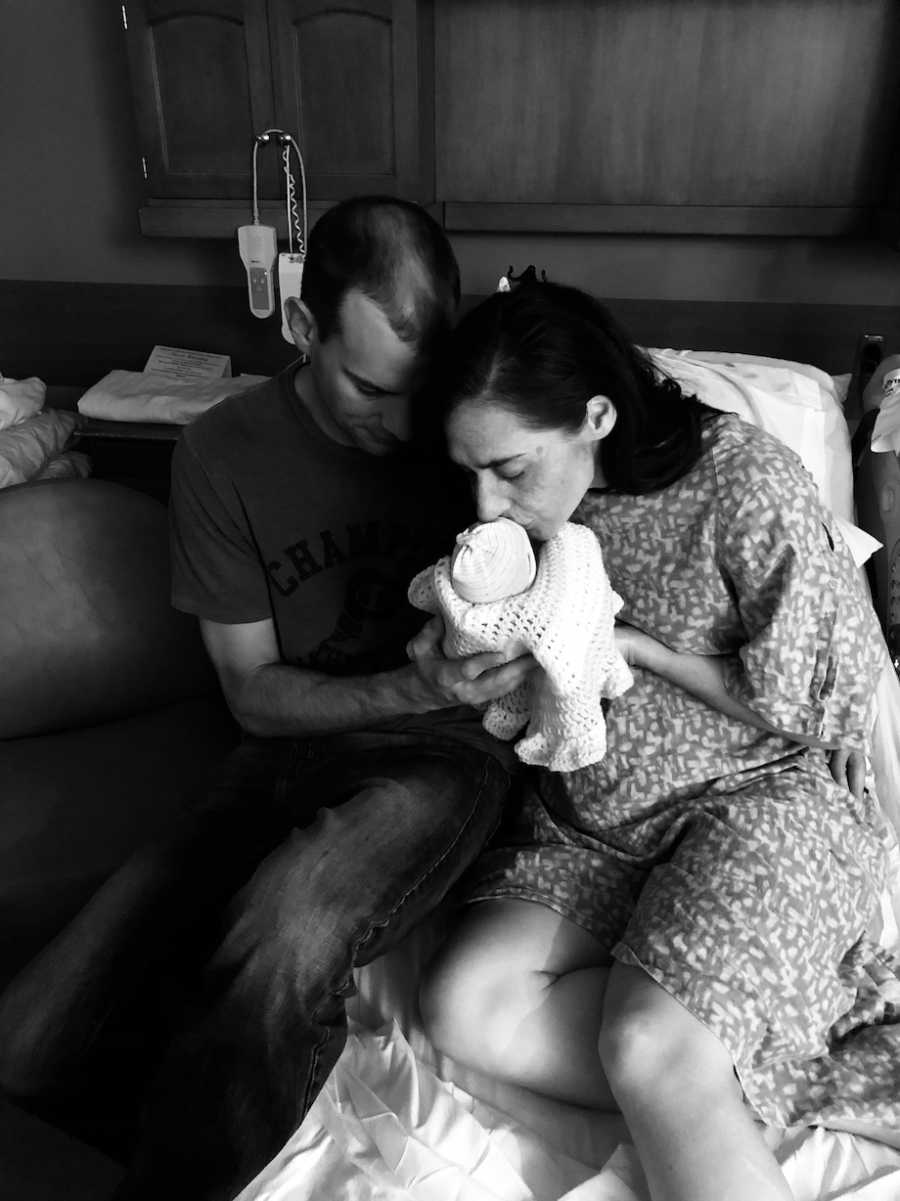
The diagnosis: Trisomy 13, likely, the very complication our doctor had hoped we wouldn’t encounter. And it wasn’t mild; it was as severe as it could get. Then came the words I had dreaded: “It’s likely you will not make it to term, or you will deliver a stillborn, or a child with severe abnormalities and no quality of life.” I felt numb. I stared at my husband, both of us caught between disbelief and heartbreak.
We ran test after test, all normal. Yet the shadow of that diagnosis lingered.
At 34 and a half weeks, I was admitted to the hospital after bleeding, expecting to be sent home. Instead, my amniotic fluid levels were more than double what they should have been, and I was three centimeters dilated. Faced with either a six-week hospital stay or induction, we made the agonizing decision to break my water, knowing it determined when our baby would die.
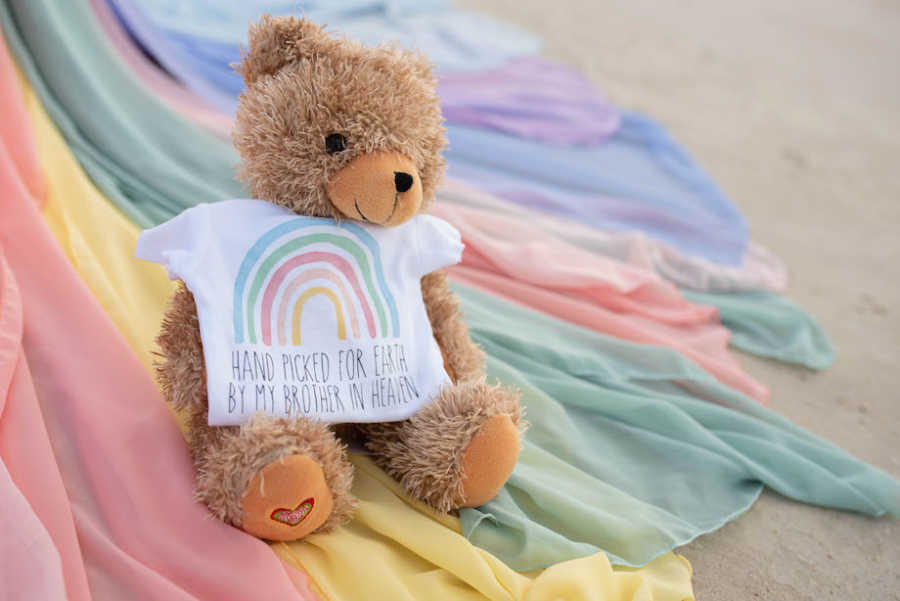
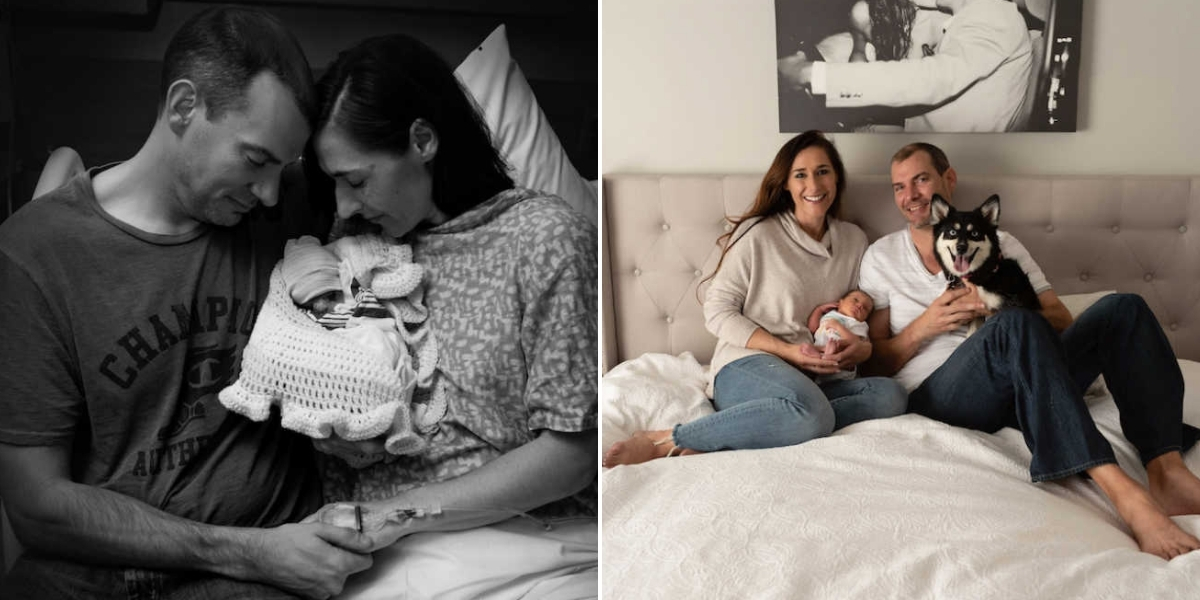
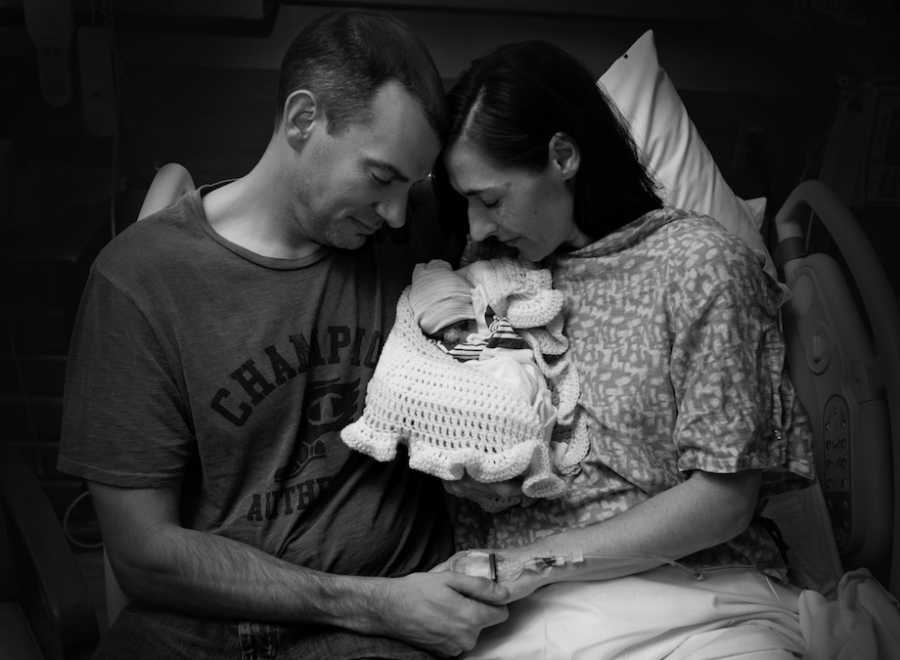
But Matthew beat the odds. Our little boy was born alive and spent two precious hours in our arms before passing peacefully to Jesus. It felt as though he was determined to meet us, refusing to leave this world without seeing our faces. We held him close, cherishing every second, until the moment came to say goodbye. The grief was overwhelming, but I knew that only God had carried us through that impossible day.
We stayed in labor and delivery that night, away from the maternity ward where crying babies echoed, our hearts too raw to face it. The next morning, we were discharged, but instead of a newborn in my arms, I carried a bag and a box with keepsakes, reminders of our beloved Matthew. The sunrise on our drive home seemed like a trail to heaven, a reminder of his brief but meaningful life.
Life continued with more heartbreak: deep grief, secondary infertility, and a miscarriage almost exactly a year later. The rollercoaster of hope and disappointment was exhausting, and I felt powerless. Seeking answers, we met with a fertility specialist, ran endless tests—again, nothing. No explanation. And yet, hope returned.
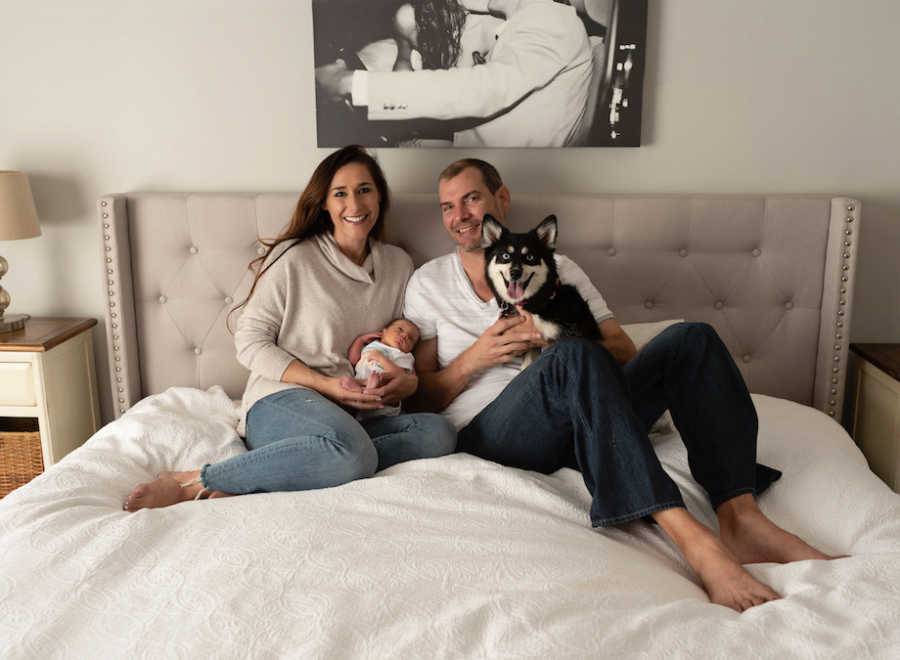
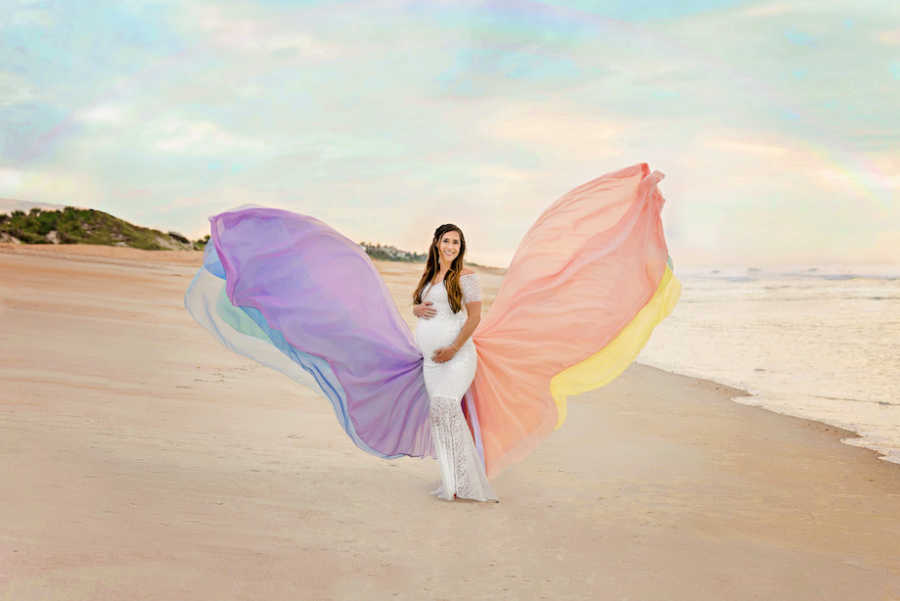
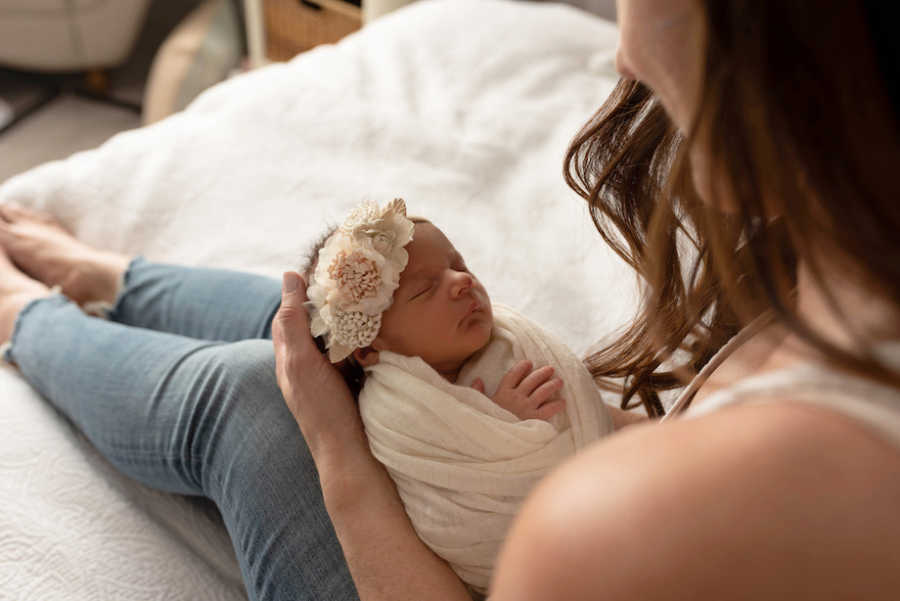
Chlomid worked like a miracle, and soon, we saw that familiar two-line confirmation: our rainbow baby was on the way. Tears streamed down my face as I hugged my husband, whispering, “I hope this one sticks.” And it did. Last summer, we welcomed our beautiful daughter, Sienna Avery, into the world. She is perfection—the light of our lives.
Matthew changed me. He made me a more patient, more grateful, and yes, more protective mother. I cherish every moment with Sienna because of him. I live intentionally, knowing the fragility and preciousness of life. And though I would give anything to hold Matthew again, his legacy lives on, guiding me, shaping my purpose, and allowing me to share our story of heartbreak, faith, and hope. Somehow, I learned to live fully after loss, carrying him always in my heart.