Early Eyesight Troubles
When the ultrasound tech told me I was having a boy, I began imagining all the things he would do as he grew up. I pictured him running across soccer fields, being competitive like I was, and loving sports with the same passion I had. I never imagined that life would take such a different path for my little boy, or that the life I pictured would look nothing like the one we’d actually live.
Ashton was born on September 22, 2011, at 41 weeks and weighed almost nine pounds. He was covered in thick hair, and I remember thinking he was the most beautiful baby boy I had ever seen. But the joy of his birth was quickly tempered when he had to be admitted to the NICU due to low blood sugar and trouble nursing. Looking back, these were the first signs of his diagnosis—but at the time, we had no idea he was blind.
Every day he spent in the NICU, I cried, aching to bring him home. After a week, he was finally discharged, but I couldn’t stop worrying about his eyes. Both of them bounced constantly, and something about it didn’t feel right. Ashton was my first biological child, and though I had raised my stepdaughter, my concerns were often dismissed as first-time mom worries. Even his pediatrician assured me he’d start tracking toys by two months like any other baby. But deep down, I knew something was off, and it was frustrating that no one seemed to notice.
A month after Ashton came home, a nurse who had cared for him in the NICU visited us. She startled him with a sound my daughter made—but unlike a typical baby, Ashton didn’t look to see what caused it. She validated my concerns, wrote a referral, and encouraged the pediatrician to re-examine his eyes. That visit led us to a pediatric ophthalmologist, marking the start of a journey I never anticipated.
Optic Nerve Hypoplasia Diagnosis
At just two months old, Ashton saw the pediatric ophthalmologist. She told me she wasn’t sure he could see and recommended an MRI to examine his optic nerves. Though she didn’t confirm blindness immediately, she warned it was a possibility. Those days leading up to the MRI were agonizing. Watching my tiny baby go under anesthesia broke my heart.
When the call came with the results, the ophthalmologist asked if I was alone and whether I had someone to talk to. My heart sank. Sitting in a rocking chair, holding Ashton close, I listened as she explained that he had Optic Nerve Hypoplasia. His optic nerves had not developed properly during pregnancy, and he was blind. She reassured me that it wasn’t my fault, but that he would need early intervention services and support from the school for the blind to reach milestones. I cried for days, struggling to accept that my son’s life would be so different from what I had imagined.
Septo-Optic Dysplasia Diagnosis
At five months, Ashton was hospitalized again for low blood sugar, which revealed another challenge: he needed thyroid medication, hydrocortisone, and nightly growth hormone injections. His diagnosis expanded to Septo-Optic Dysplasia. Administering injections to my tiny baby every night was heartbreaking, and it took time to adjust to his lifelong medications. Simple milestones that sighted babies achieve easily—like picking up a Cheerio from a TV commercial—felt impossible. I grieved the child I thought I would have, while slowly realizing how beautiful life with my blind son could be.
Milestones
Ashton’s milestones came later than most, but each one was a triumph. When he crawled at a year old, I cried tears of joy. His first steps were unforgettable—he walked straight toward his sister’s voice, arms outstretched for a hug. With the help of a home visiting physical therapist, we worked on exercises to strengthen his muscles, as low muscle tone was part of his diagnosis.
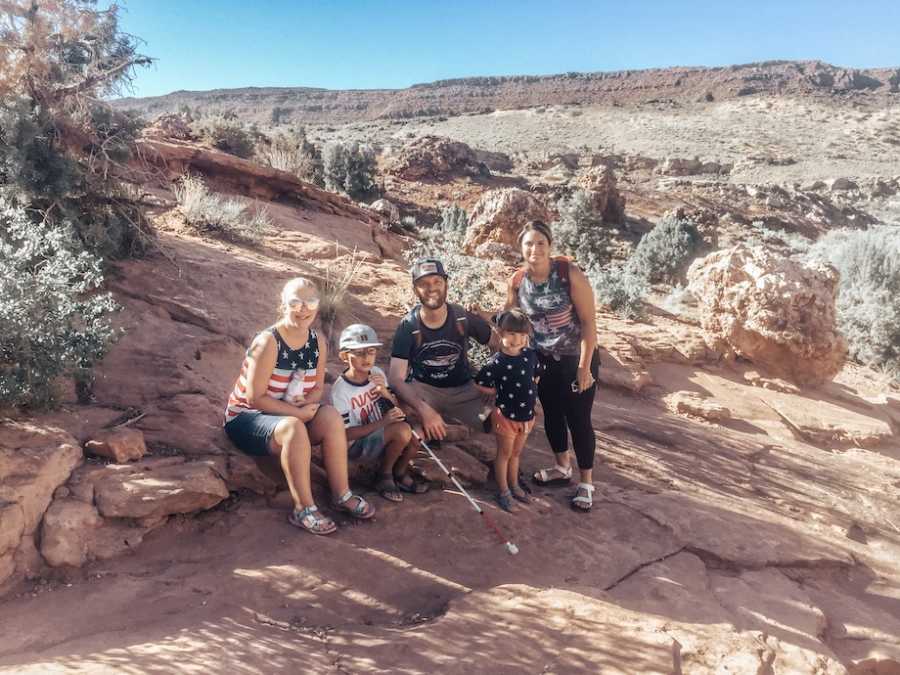
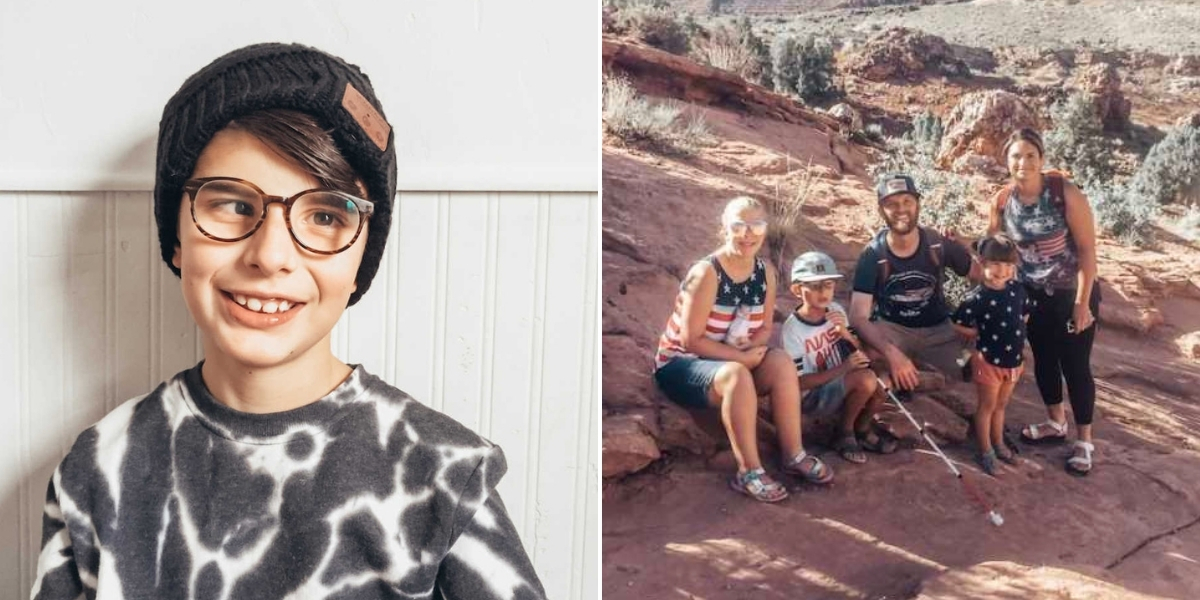
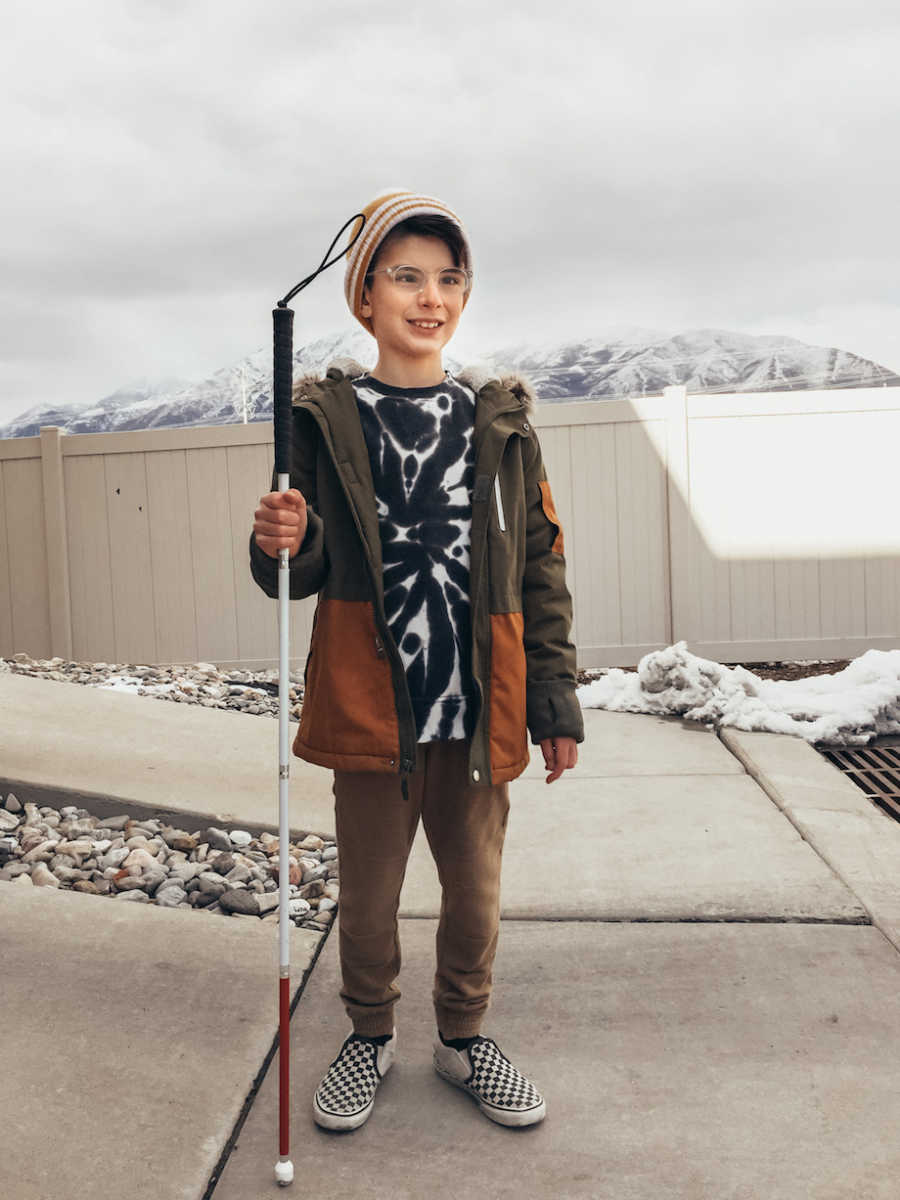
Once he walked, he became unstoppable. By age two, he was running with his white cane in the playground, exploring the world in his own way. I remember feeling self-conscious when other parents looked differently at him, but I also realized that the white cane was not something to apologize for—it was a tool of independence. I wish more parents would answer their children’s questions about special needs with curiosity rather than embarrassment.
Learning Braille
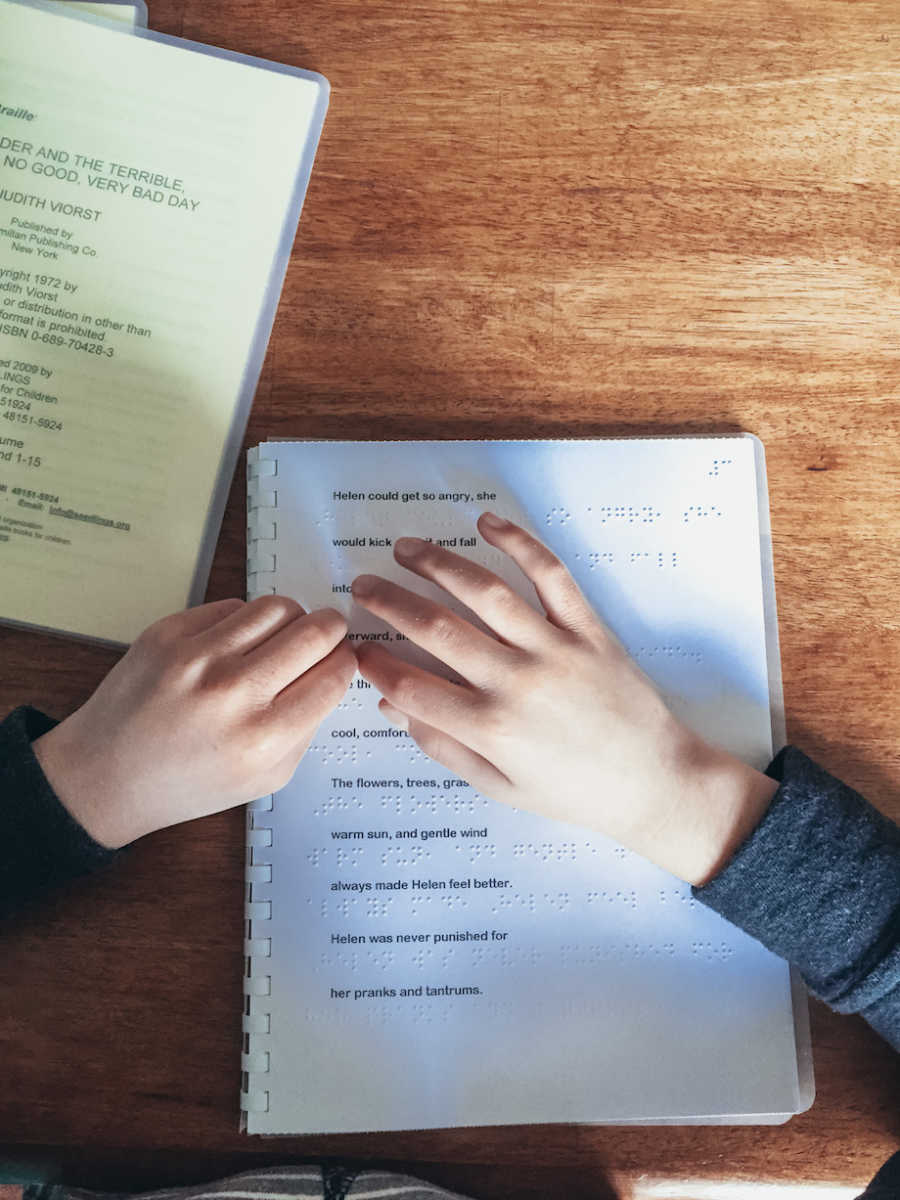
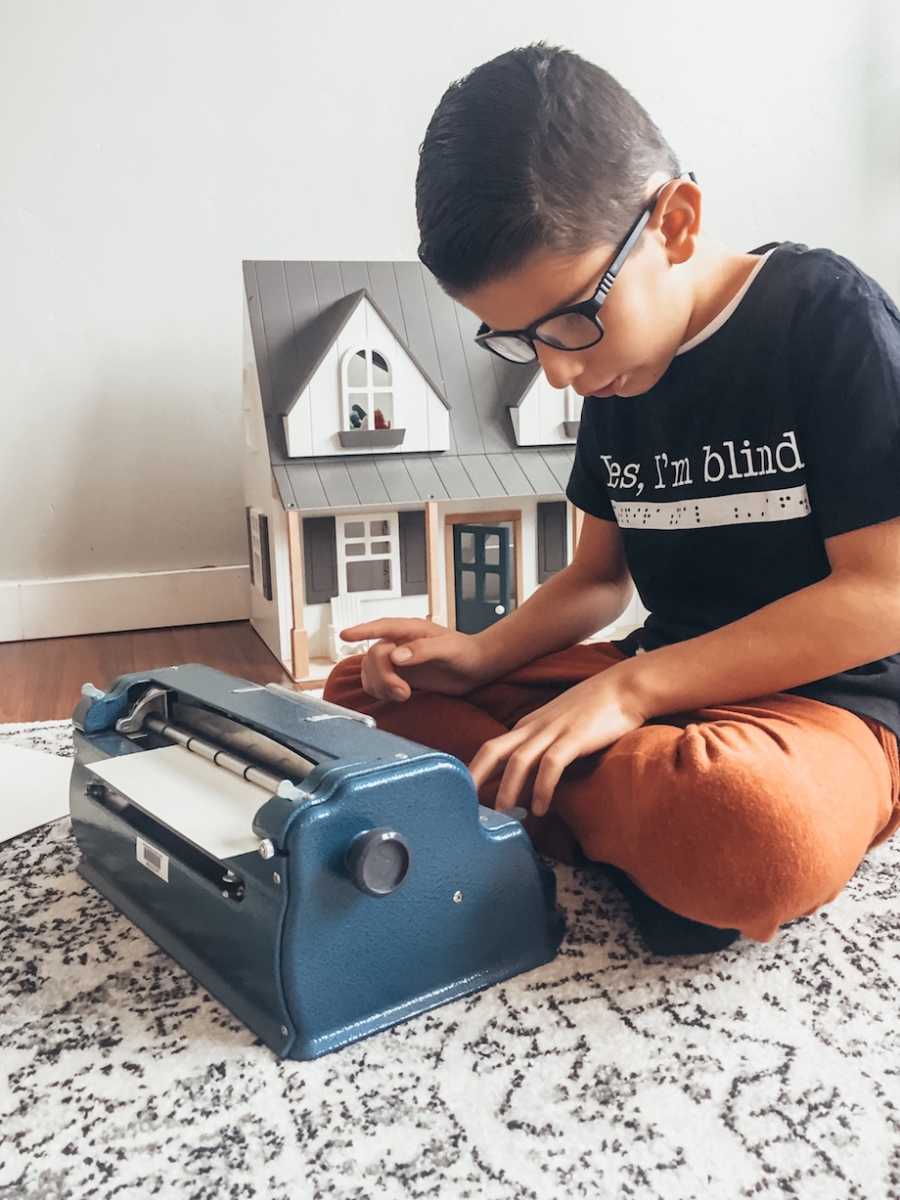
At age three, Ashton started preschool and began learning Braille. I worried about teaching him to read without knowing Braille myself, so I took a course from one of his teachers and an online program for parents. I quickly learned the new alphabet and labeled every corner of our home in Braille—toy baskets, books, even rooms—so he could explore language through touch, just like sighted children do through print. By Kindergarten, he could write in Braille and gradually learned to read it too. Now in third grade, he excels at both Braille and large print and participates fully in a regular classroom.
Overcoming Challenges
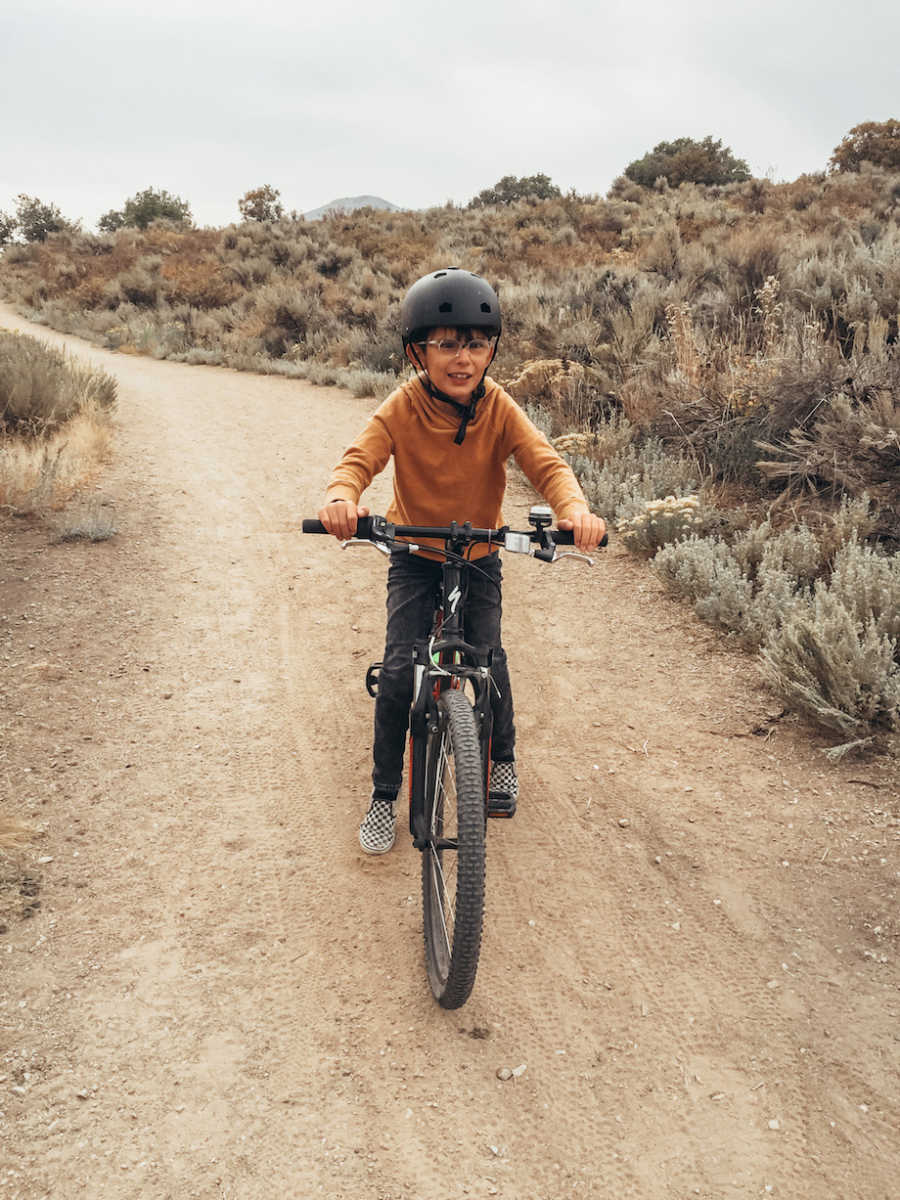
Ashton’s left eye began to show signs of vision beyond light perception. One miraculous day, he pointed to my nose and eyes when I asked him, a moment that filled my heart with awe. He has learned to ride a balance bike, a scooter, and even ski with the help of a guide. At seven, he taught himself to ride a two-wheeled bike, a moment of pure joy and pride for our family.
His accomplishments continue to astonish me. He has sung on stage to support nonprofits, won awards for his art and photography, and recently began piano lessons, showing a natural gift for hearing and playing songs by ear. At just nine years old, Ashton has already achieved so much.
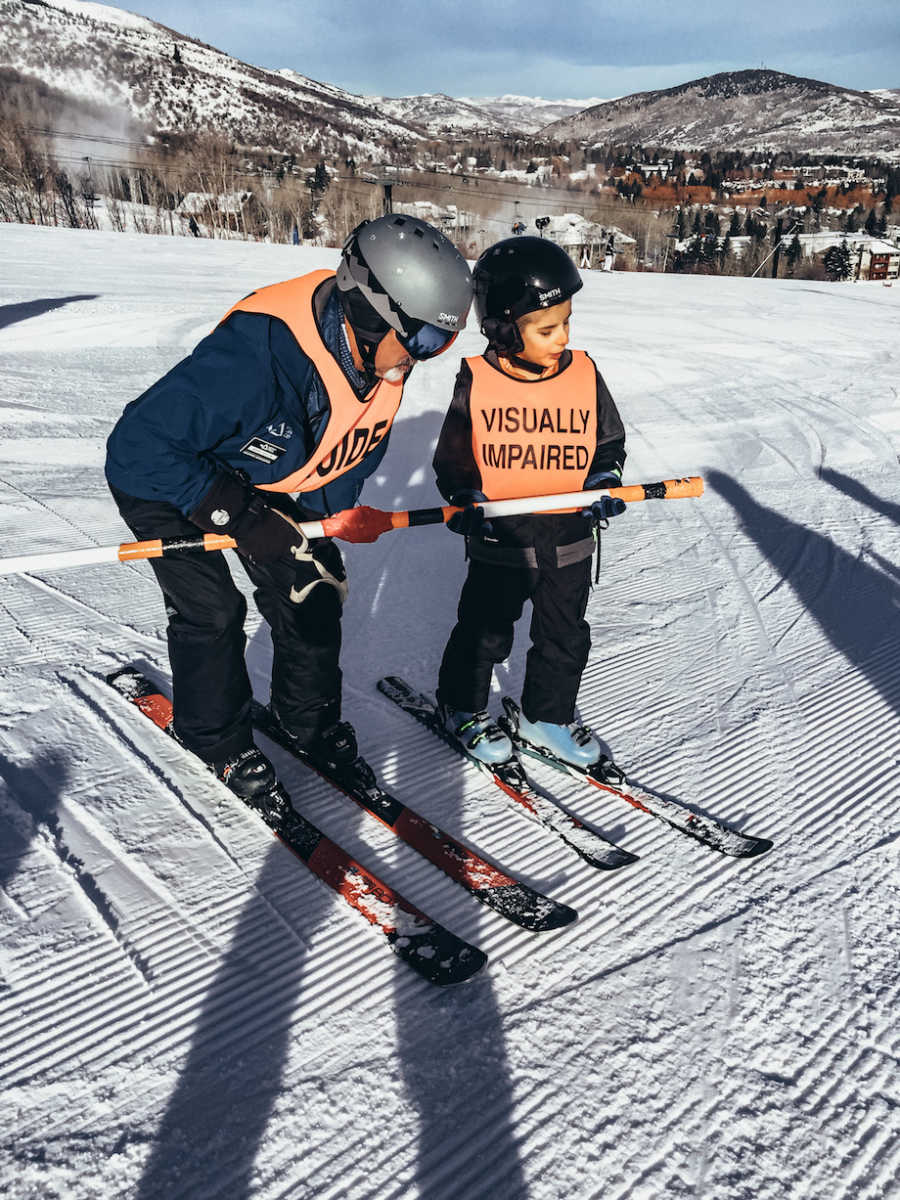
A Life Without Limits
If I could tell myself nine years ago anything about his diagnosis, it would be this: never assume it limits what he can do. Ashton has taught me the greatest lessons—about determination, hope, and experiencing the world with your heart. I no longer feel I’m missing out on milestones other parents celebrate. In fact, having a child who is blind has been a gift. I get to describe the world to him, to share experiences in a way few parents can. Watching Ashton grow fills me with joy, pride, and anticipation for all the incredible things he will do next.