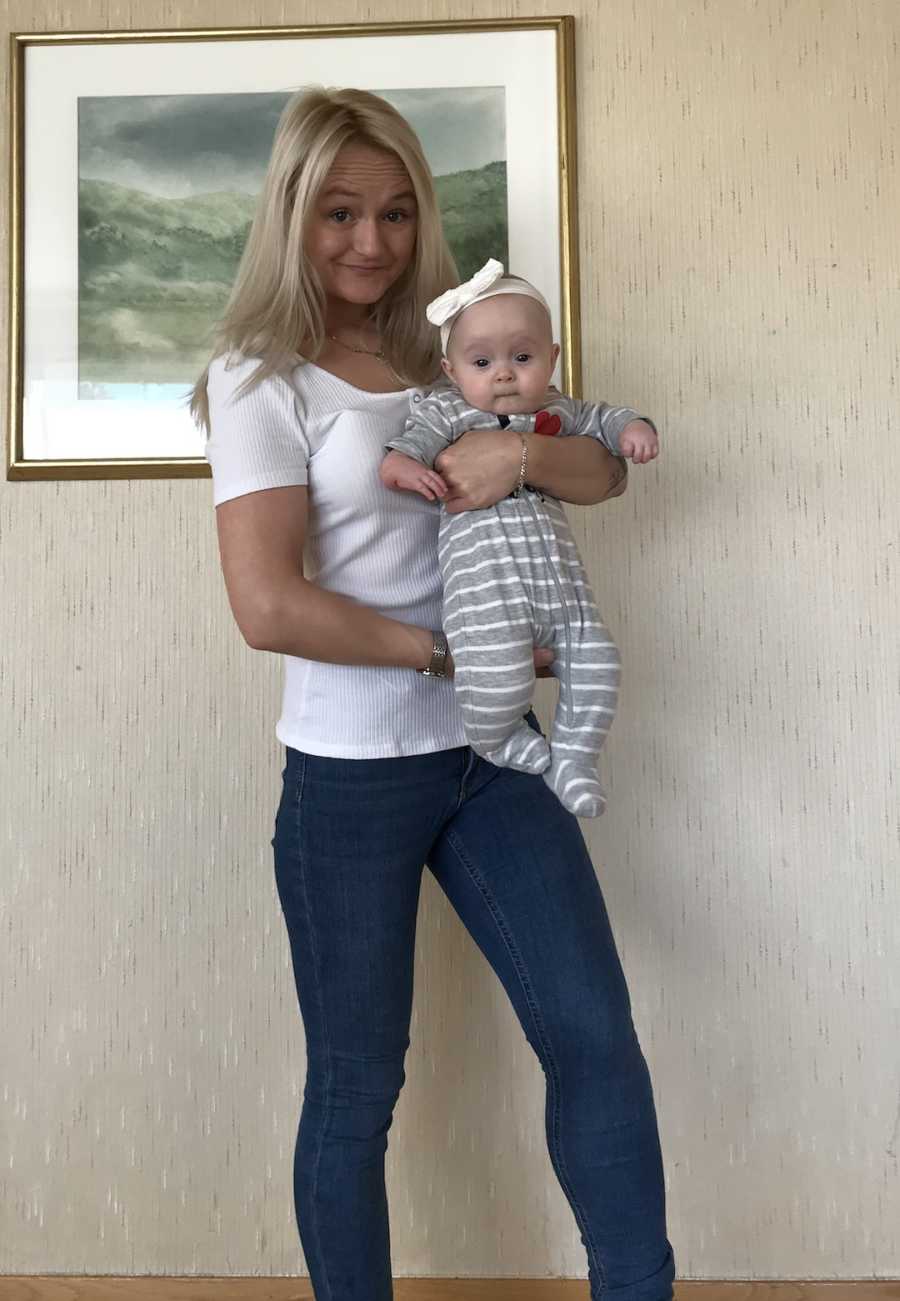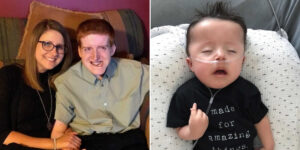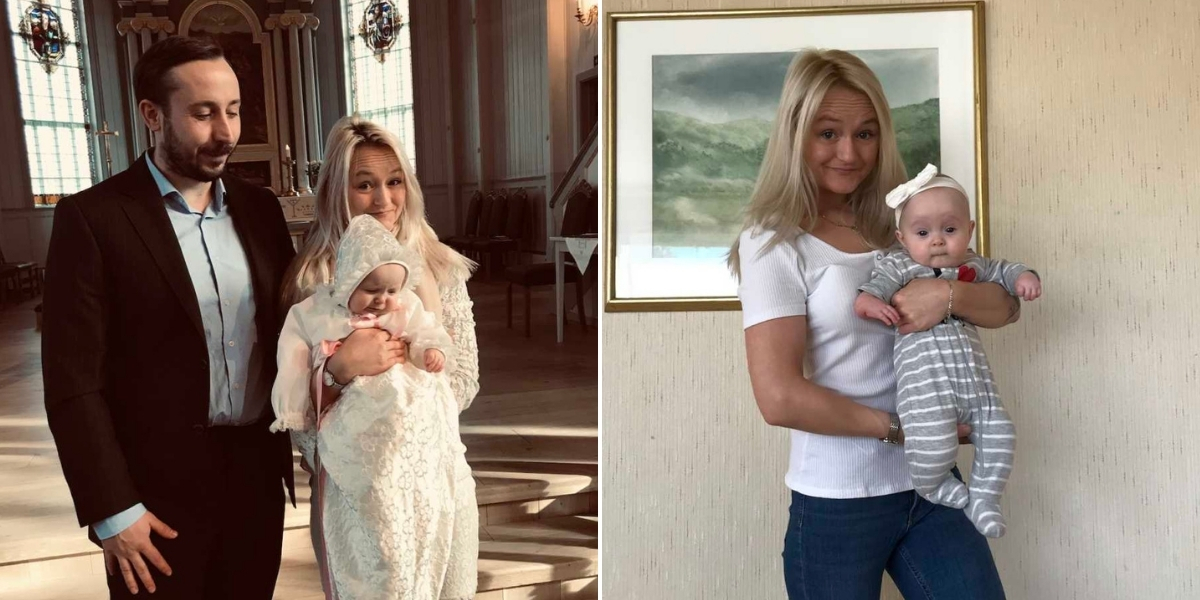
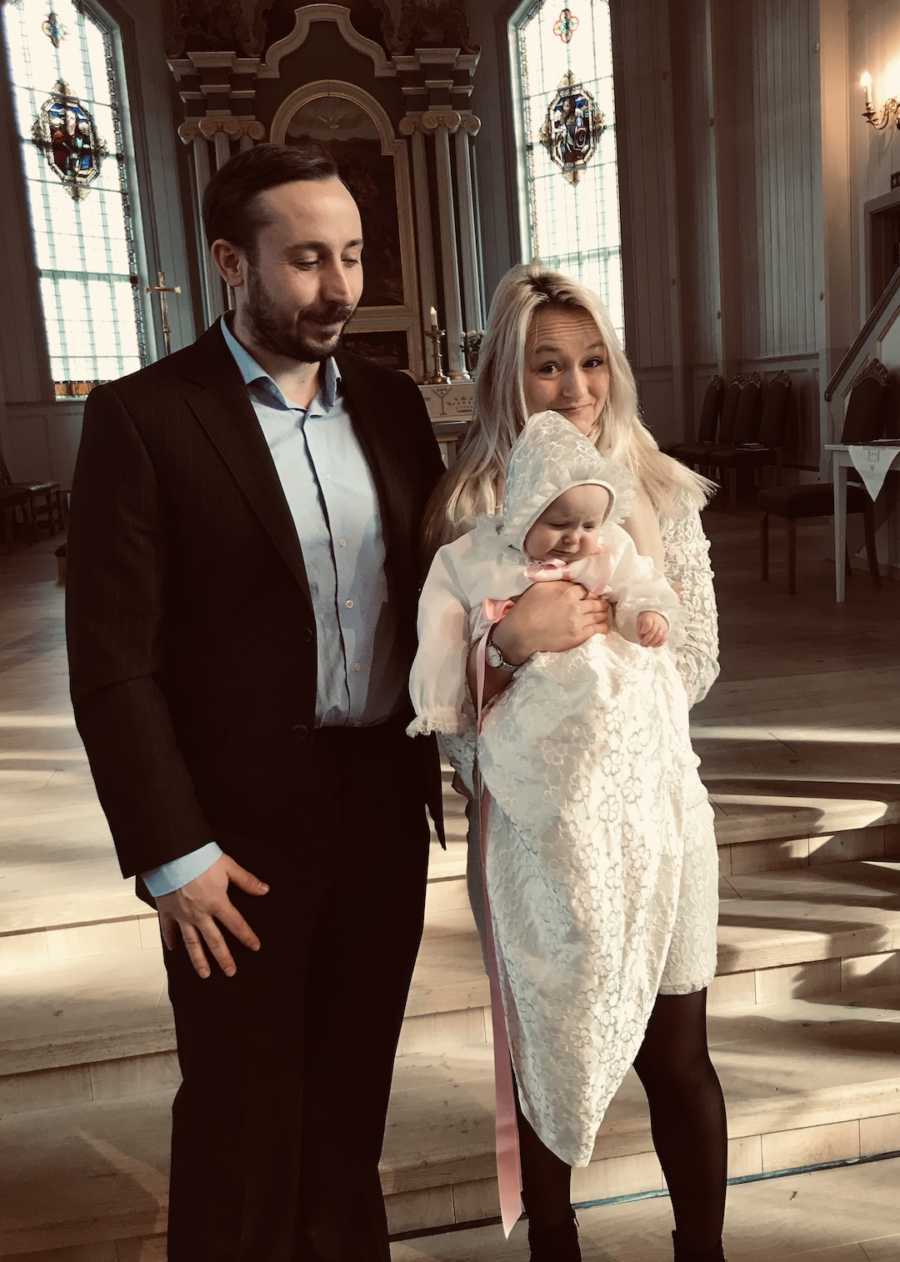
My journey before settling down with a family is quite long, but it’s shaped who I am today. I’m a 26-year-old Norwegian woman from Hordaland, in West Norway. I’m with my best friend, a wonderful man from Dublin, Ireland, who is 32. We first met while living in Fuengirola, Spain, and quickly became inseparable.
I had always dreamed of having children, and when I met him, I felt ready to leave behind the life of constant travel for the quieter, steady rhythm of family life. I had explored the world and experienced the things I wanted to, and now I was ready to take on the responsibility and joy of raising a child.
After some time together in Spain, we discovered we were expecting a little daughter. Being from two different countries—him from Ireland and me from Norway—we had to decide where to raise her. We ultimately chose Norway, and looking back, I’m so grateful we did. Mia arrived a little earlier than expected, and Norway’s excellent healthcare system gave us reassurance and support from the very beginning. As for the future, Mia is a dual citizen, and we have the freedom to live in Ireland later if we wish.
My pregnancy with Mia was a dream. I experienced very few symptoms aside from gaining 20 kilos, growing a big belly, and feeling those daily little kicks that made my heart melt. But the birth itself came as a shock. One morning, I woke up with some back pain—nothing worse than the soreness after a gym session—but I went to the hospital for a routine check-up. I still thought everything was fine. Upon arrival, the staff quickly realized I was in labor.
Because Mia was two months early, we were transferred to a hospital in Norway equipped for premature babies and with a neonatal intensive care unit. The doctors initially tried to slow my labor, but after a few hours, her heartbeat started slowing. They told us we would meet our daughter very soon. I couldn’t believe it—I had no pain and didn’t feel like I was in labor, even when asked to start pushing. To this day, I joke that giving birth was less painful than stepping on a LEGO.
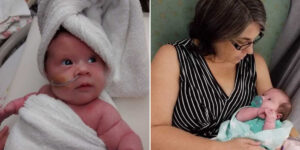
When Mia was born, they placed her briefly on my chest, and we immediately noticed that her hand and foot were different. She was quickly taken to the neonatal intensive care unit to be examined and cared for. I, on the other hand, had to remain in the delivery room for an hour, fully healed and able to walk, but alone and uncertain about my baby. That hour was the longest of my life.
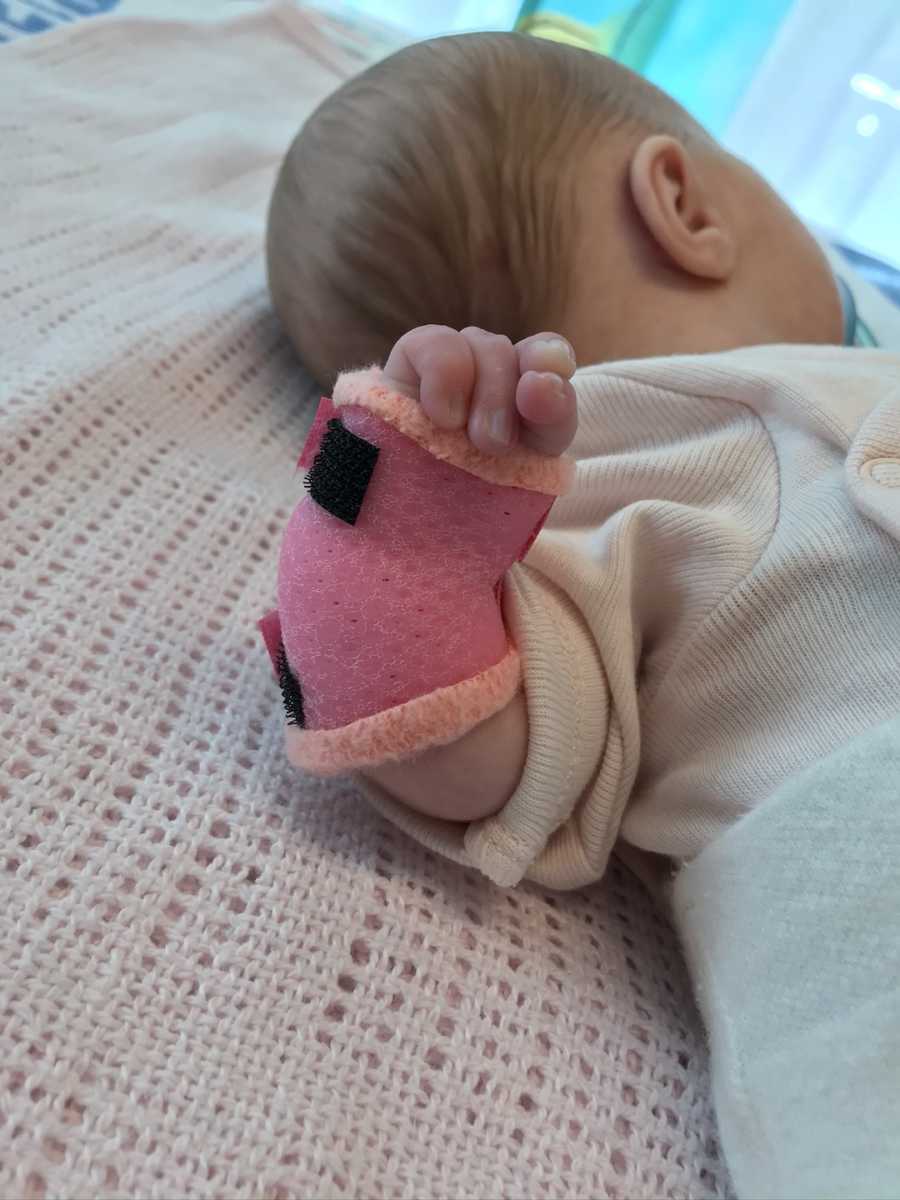
Mia was born with a congenital limb difference, something we had no idea about before her arrival. And yet, it didn’t matter to us. She is our daughter, perfectly as she was meant to be. Every day, we celebrate her just as she is, and we couldn’t imagine her any other way.
Because Mia was premature, we stayed in the hospital for a couple of weeks—Norway doesn’t discharge babies under 35 weeks. Apart from missing a few bones, she was entirely healthy and showed no syndromes often associated with congenital limb differences.
In the days following her birth, we met specialists and learned about her condition. Congenital limb difference occurs when a baby’s limbs do not fully form in the womb, sometimes due to syndromes, sometimes by coincidence. In Mia’s case, it happened by chance, without affecting her overall health.
Mia is missing the radius bone in her right arm—the bone on the thumb side—which means her hand stays at a 90-degree angle and she doesn’t have a thumb. She wears a cast at night to help straighten her hand, and in the future, she will have surgery to create a functional thumb and improve hand alignment. Despite this, she already uses her hand without difficulty, and for her, this is normal.
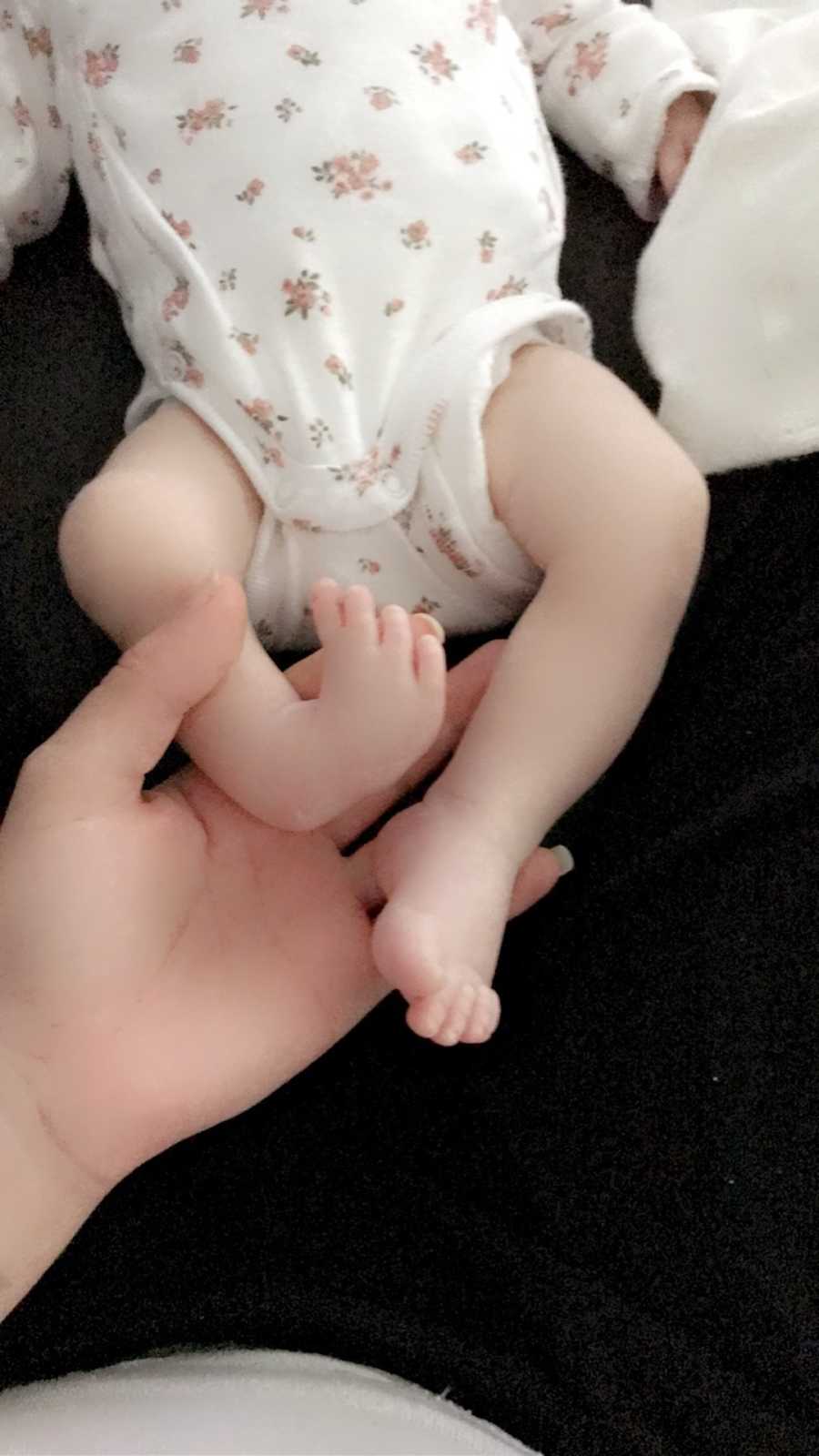
Her leg is missing the tibia, the main bone connecting the knee to the foot, so her foot doesn’t fully connect to her leg. Eventually, we will amputate the leg at the knee and fit her with a prosthetic, allowing her to walk and move freely. We are excited for this, because it will remove a nonfunctional limb and give her a normal, active life from the start.
When we first learned of Mia’s condition, we never felt sadness or regret. She is born exactly as she should be. We don’t question why it happened—she came into our lives just the way she is meant to be. Modern medicine ensures that she will be able to live a full and active life, accomplishing everything she sets her mind to. The only worry I had at the start was whether her hand or leg caused her pain; when we were told they didn’t, we felt nothing but relief.
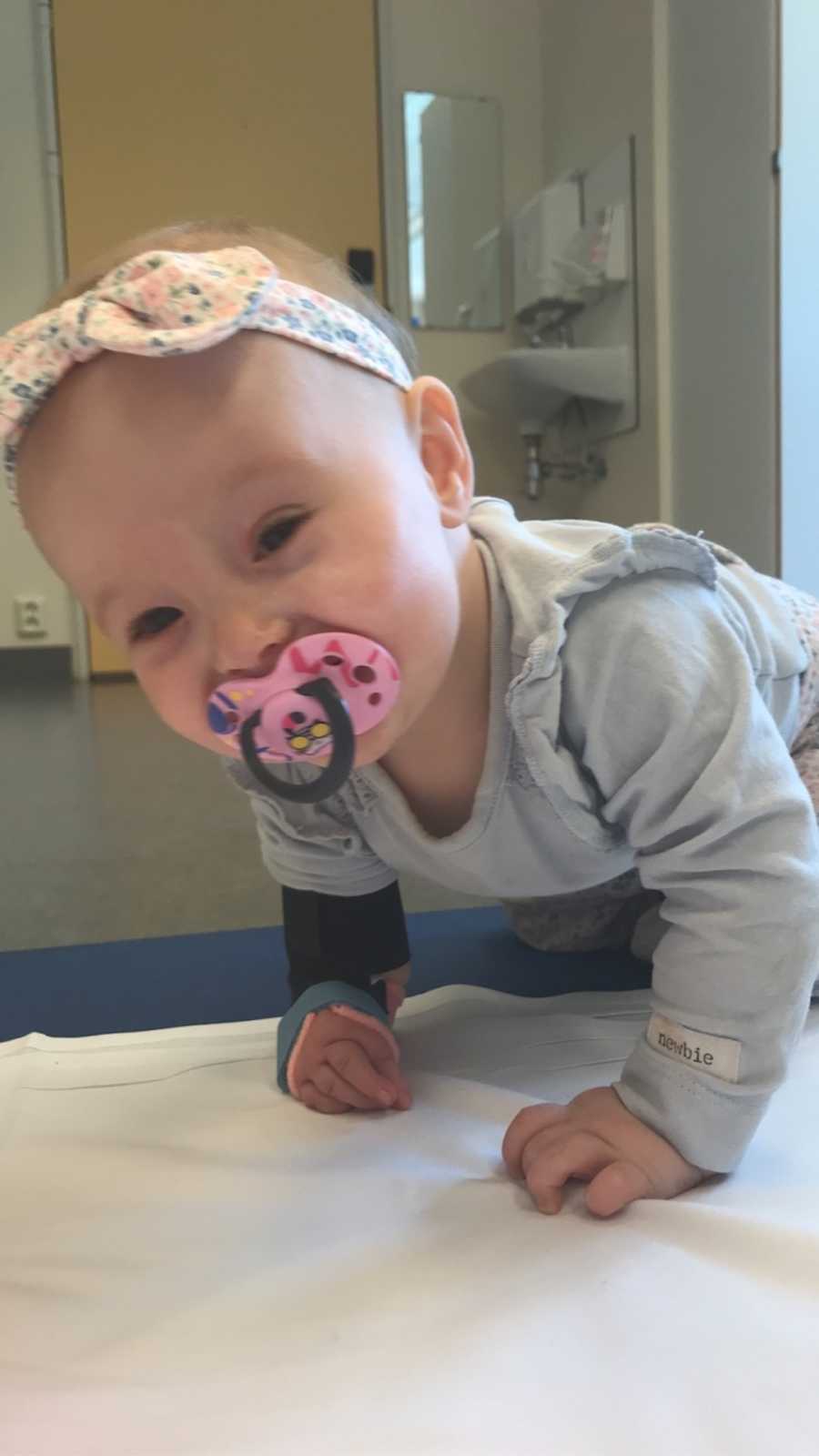
One thing that sometimes upsets me is when people ask how it feels to have a “sick” child. Mia is not sick—she is healthy, vibrant, and wonderfully unique. The differences in her body simply make her who she is. Another phrase that bothers me is the idea that we are “strong” parents because of her needs. Every parent faces challenges, and all deserve recognition. Our role is simply to love, support, and guide our child—just as any parent does.
Today, Mia continues to thrive. She has been a dream baby from the beginning, sleeping well and filling our days with joy. She is learning and growing just like any other child, developing her skills naturally without special training. Her one functional foot and her hand in its unique position are normal to her, and she finds her own ways to navigate the world with ease.
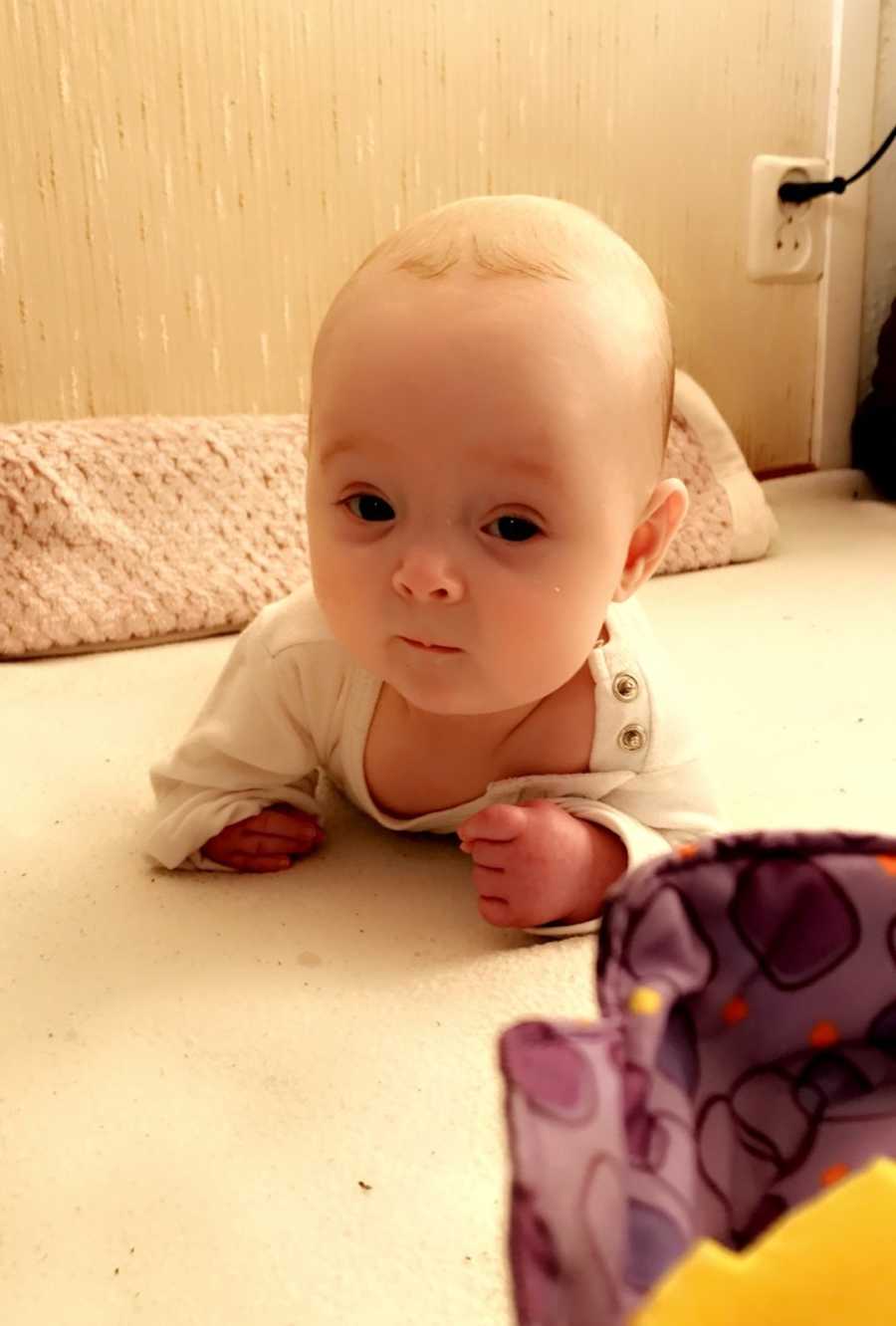
Our little girl is living proof that love, acceptance, and support are what truly matter. She is strong, happy, and full of life, and we are endlessly grateful to call her ours.