She looked over at us during dinner, her brow furrowing as she squinted and shook her head. Her expressions were so exaggerated that even her own children at the table glanced at us, bewildered. Slowly, the entire table’s attention drifted our way. Thankfully, most of my family’s backs were turned, sparing them from seeing what I did. It felt almost intentional, as if she were performing some over-the-top show of disapproval just for me.
I will never understand people like that. Why waste your energy, especially when my children are present? Is it some kind of inferiority complex? Does seeing a family like ours make her question the value of her own? It became painfully clear to me that her demeanor shifted when she noticed our middle daughter—our black daughter, the same race as the onlooker. But two white dads? That, apparently, was too much for her to accept.
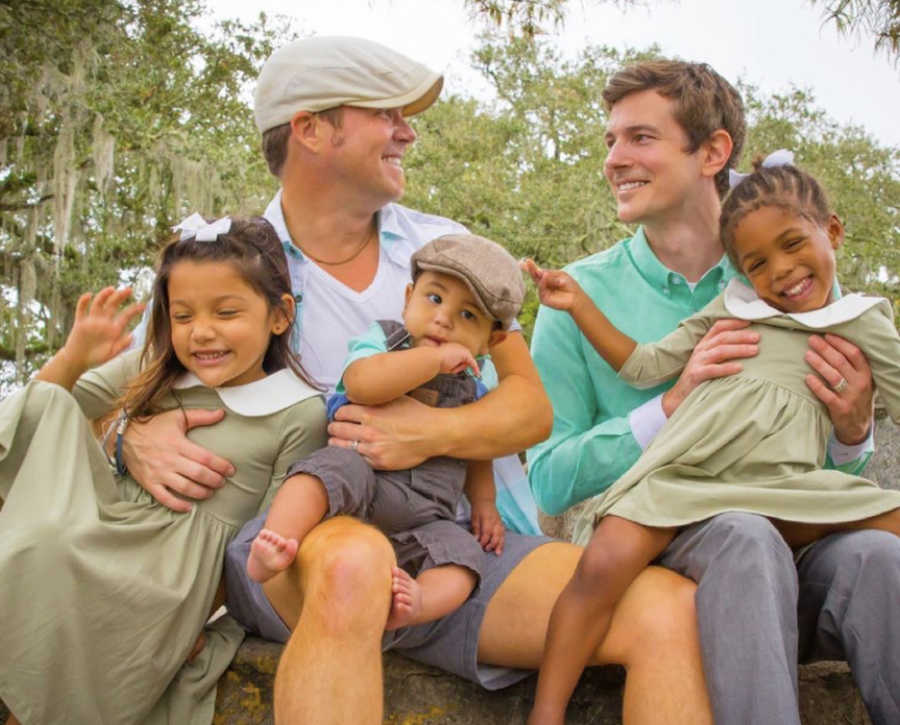
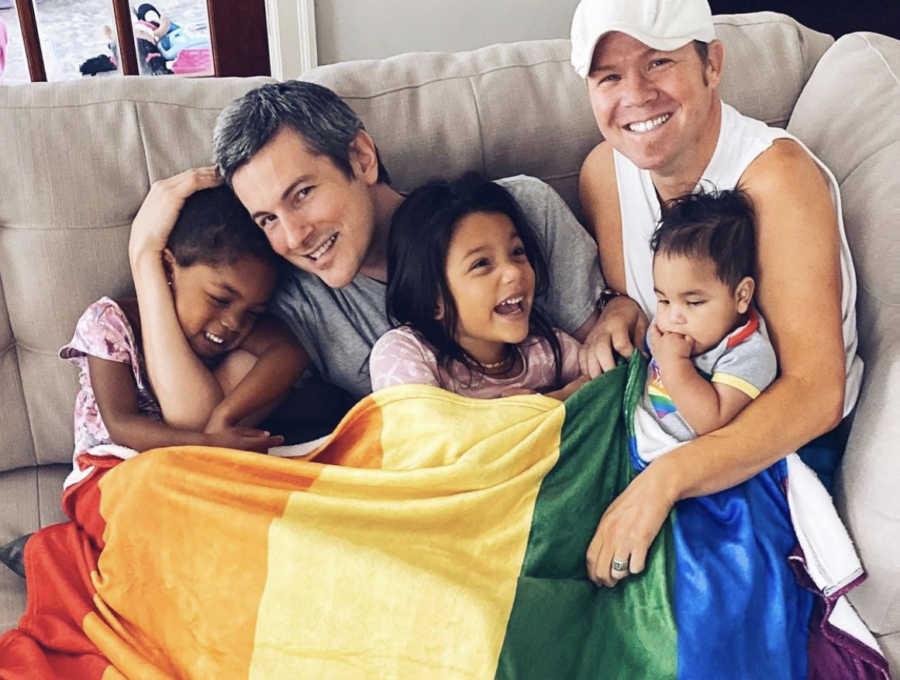
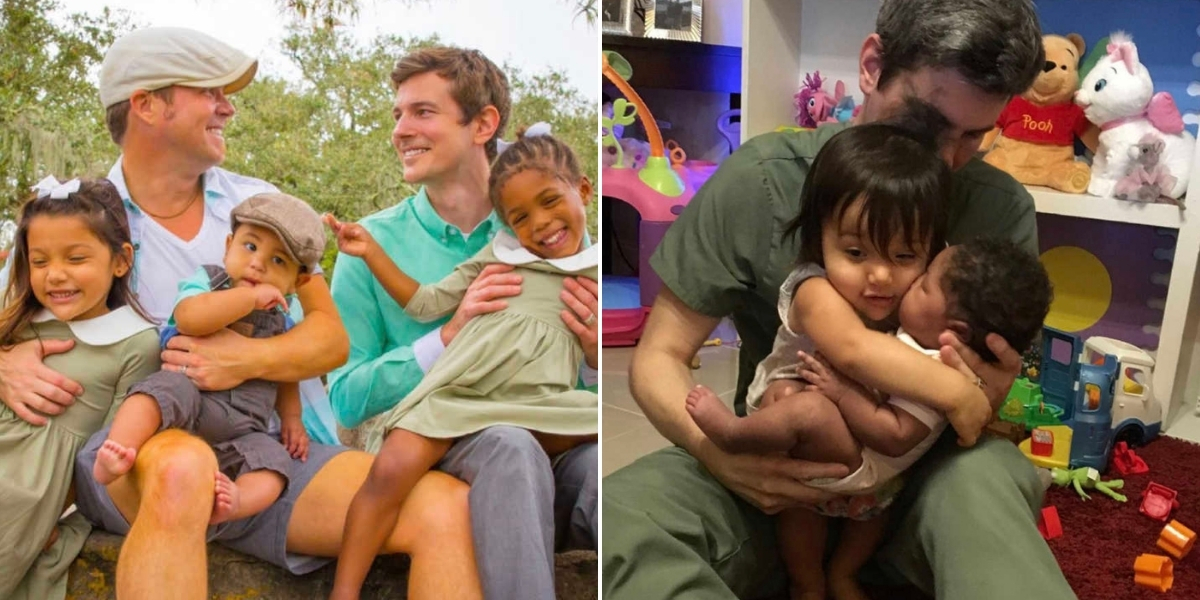
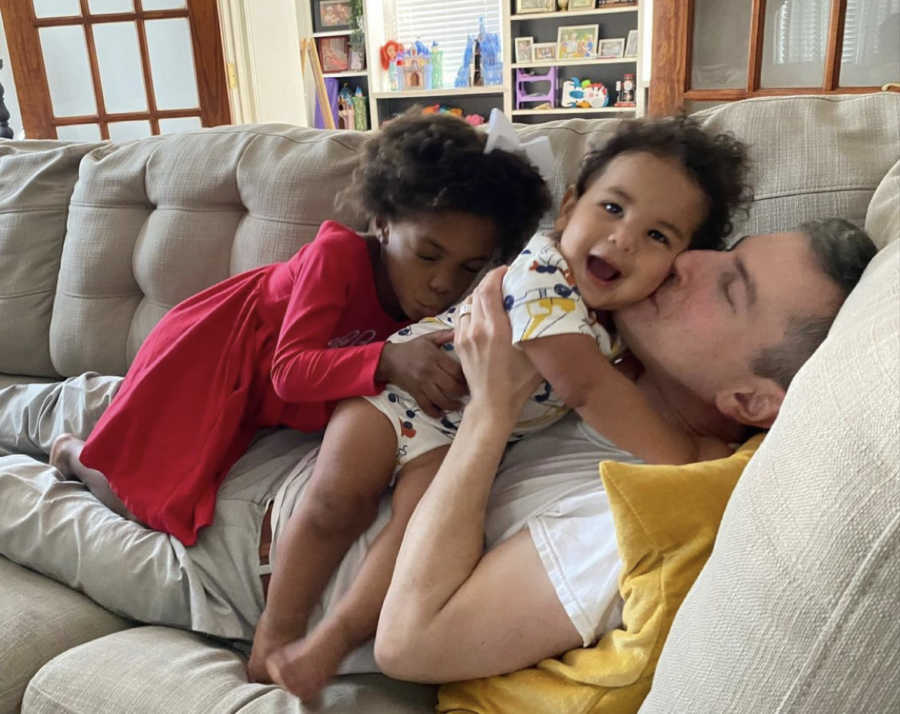
We are two gay dads raising our mixed, adopted children. And though moments like that sting, they also strengthen our resolve. I wish I had had the right words to defuse her anger, but I was left speechless. In that instant, I reflected on how lucky we were to have our daughter. We had rushed to say yes when her birth mother called about a match. That one decision changed the course of her life.
I grew up in the same small town in South Mississippi as her birth mother, a place I know well—the same sno-ball stand, the same hot summer days at the creek. It was a poverty-stricken town, where my father, who was unfit as a parent, would take us to the creek on stifling summer afternoons. He taught me simple joys, like writing my name in the sand under the old overpass. I know that way of life intimately because I lived it. Without us, our daughter may have faced unimaginable hardships, ones no child should endure. And while another family could have stepped in, who’s to say what her life would have been?
You can never truly know the challenges another person is facing. That woman’s judgment toward our family is something I haven’t forgotten, but it didn’t breed resentment. Instead, it fueled determination—determination to prove that love and family know no boundaries. Thousands of people across this country may still question our right to be married, much less to parent beautiful, thriving children. My message is simple: when you know better, you must do better. And once you reach that understanding, the responsibility to change falls squarely on your shoulders. Change can mean better language, better habits, better modeling for your own children.
Even families from deeply religious homes can embrace this. How we treat those with different lives and beliefs shapes the next generation. Children watch, they mimic, they learn whether we realize it or not. A simple smile, an act of kindness, can brighten someone’s day—or cast a shadow. Live and let live.
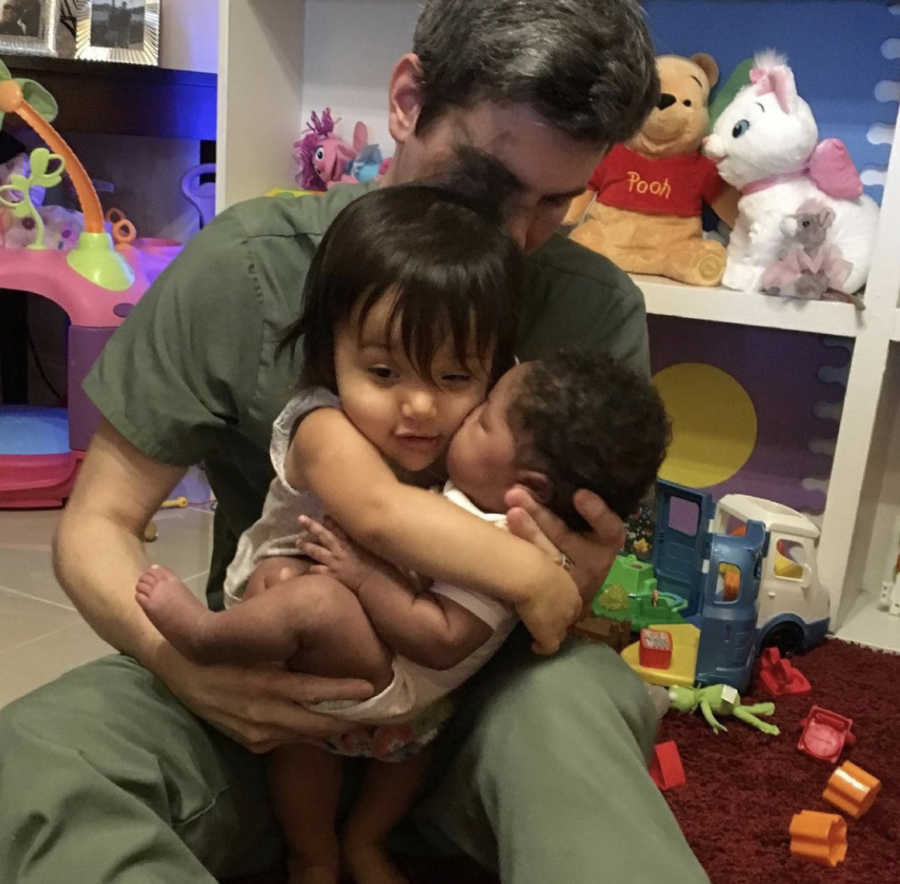
Children are the future, and as parents, we get to mold them. Every lesson, every example we set becomes the foundation for the adults they will grow into. My husband and I would do anything for our three babies. I would lay down my life in an instant for them. Anyone unwilling to do that should reconsider parenthood.
When I started my blog, Nolapapa, I didn’t anticipate the reach it would have. It became a window into our family life—how we practice love, empathy, and leadership every day. Yes, we are gay. Yes, we have a diverse family. And yes, we are proud. All our children are baptized, and our Episcopal church community has embraced us wholeheartedly. We teach our children that every person is a unique creation of God, beautiful and loved.
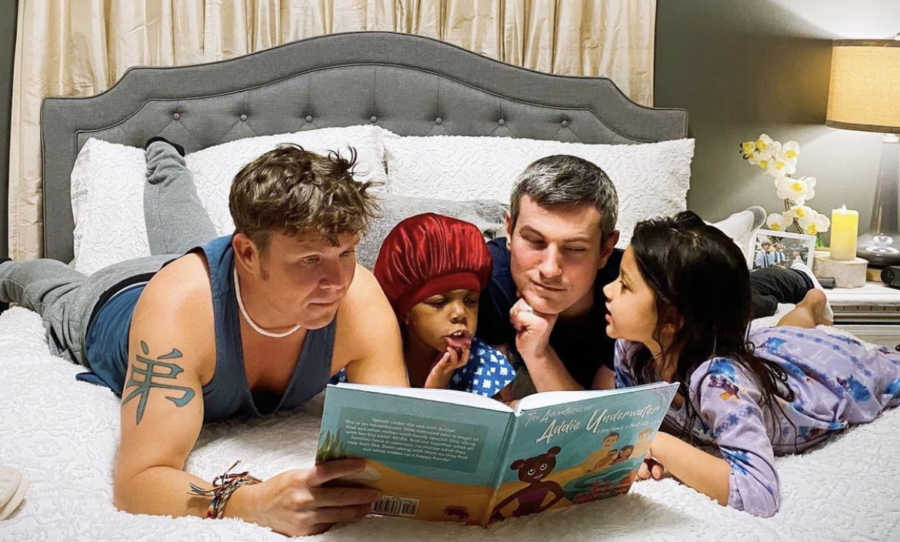
From that belief, I felt compelled to do more. Family is family, regardless of who loves whom or the color of their skin. That led me to create a children’s picture book series to teach kids ages 3–10 about unconditional love. The Adventures of Addie Underwater reflects our own family. Addie is inspired by our middle daughter, and her siblings are modeled after our other children. Two white dads, a black daughter, and her brown siblings—all represented. This book opens doors for important conversations, shows the value of representation, and normalizes families like ours. Tolerance breeds acceptance, acceptance breeds kindness, and kindness leads to love.
The impact of this work was clear during my book release at a historic Uptown New Orleans bookstore. A little girl raised her hand, voice trembling: “My daddy has to work, and I never get to see him. And then my mommy watches me, and when she can’t, my Nana… and when she can’t, the babysitter has to watch me. I don’t want my babysitter to watch me. I just want my daddy to be home. And my mommy to be home…”
I had to compose myself. All eyes were on me. “What’s your name?” I asked. After hearing it, I knelt down. “Did you know I talk about exactly this in my book?” I said. I explained how sometimes parents work so hard to create a life full of experiences and love for their children. Her eyes brightened, a small smile replacing tears.
As we continued reading, she clapped at the moments that reflected her own experiences, connecting deeply with Addie. That is why I wrote the book: every child deserves to see themselves reflected in stories of love and family.
It begins at home. Lead by example. Stop cycles of ignorance. Teach acceptance. Teach love. My first book in this five-part series focuses on family diversity because, out of over seven billion people on this planet, families come in endless forms—but love is universal.
Moments like that little girl’s remind me why representation matters, why empathy matters, and why storytelling matters. Children absorb emotions, lessons, and examples with open hearts. Our responsibility as parents is to meet those moments with compassion, guidance, and love. That is how we shape the next generation—one family, one story, and one open heart at a time.