I sit here trying to figure out how to begin my “story.” A story is usually defined as a narrative of past events, something that has already happened. But for me, this isn’t the past. This is still my present. This is simply another day in my ongoing journey of recovery from a car accident I was in nearly four years ago, on October 8th, 2017.
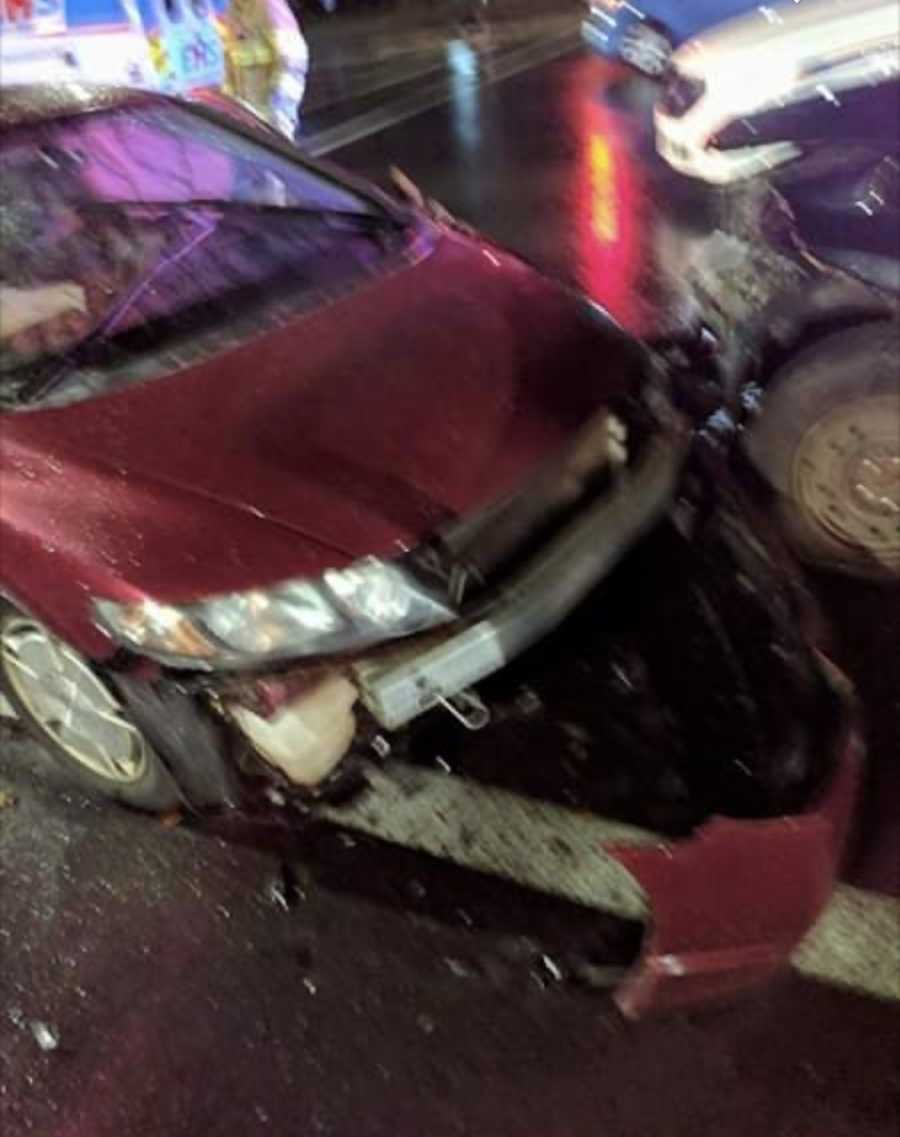
I had barely begun my life as a 20-year-old when that accident flipped my entire world upside down. I was sitting in the passenger seat of a friend’s car, out for a drive the night before Thanksgiving, when another vehicle ran into us, T-boning our car in an intersection while we had a green light. My friend was screaming, I was disoriented, and I was in excruciating pain. It felt like I had been stabbed in the abdomen. The smell of chemicals from the deployed airbags filled my nose, and I knew I needed to get out of the car immediately because I was about to vomit. A woman who witnessed the accident helped me to the curb after I made sure my friend was okay, and she stayed with me until emergency responders arrived. I did end up expelling my lunch, but thankfully, I made it out of the car first.
Some time later, a paramedic performed initial checks to make sure I was stable and began walking me toward the ambulance. As we walked, I suddenly started to collapse, only to be caught and steadied by her. From there, I was taken to the hospital, where my mom and my friend’s mother met me. They asked if I was okay, and the moment I said, “I’m fine,” everything changed. The world began to wobble, sounds became muffled as if I were underwater, and I could hear voices saying, “Ashtyn, can you hear me?” and “Please move, we need to get her out of here.” I couldn’t respond. I lost consciousness and was transferred to another hospital in the city where the trauma center was located. According to medical reports, I was resuscitated three times on the way. I briefly regained consciousness on a cold metal slab, surrounded by medical staff trying to explain what was happening. I felt my clothes being cut off, then my bowels gave out, and I remember thinking, “Well, that’s embarrassing.” After that, I woke up 48 hours later in the ICU, in immense pain, heavily medicated, with my mom sitting beside me.
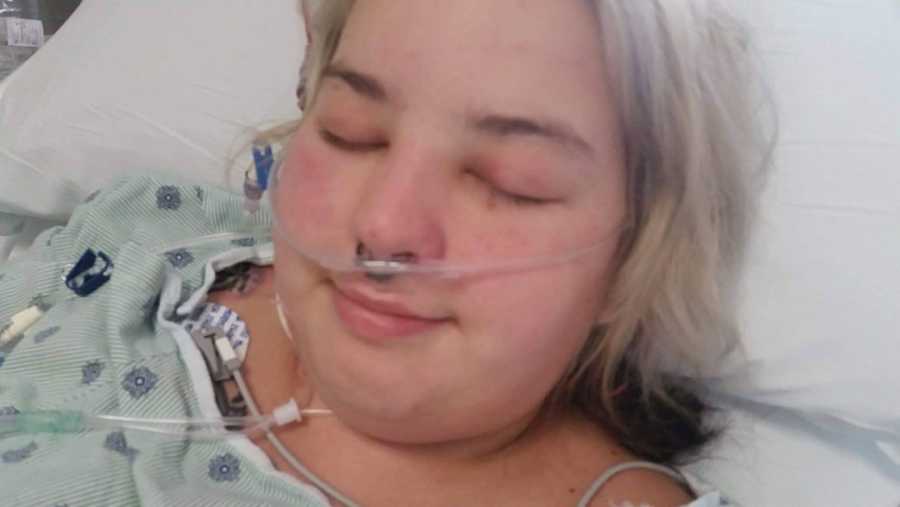
Later, I learned that the seatbelt had locked upon impact, causing severe internal damage. Blood vessels in my intestines had broken, and surgeons were forced to remove several inches of my small intestine. I spent six days in the ICU before being released into my mom’s care and sent home to recover. I truly believed that was the end of it. I was wrong.
Two months later, in December, after weeks of extreme fatigue and lingering pain, I woke up with unbearable abdominal pain and went to see my family doctor. After examining me, she immediately knew something was wrong and sent me to the emergency room. A CT scan revealed that my intestines had not healed properly and that I had developed an intra-abdominal abscess. For the second time in just three months, I underwent another surgery to essentially vacuum out the infection. I was put on antibiotics and spent Christmas in the hospital—my second holiday there that year.
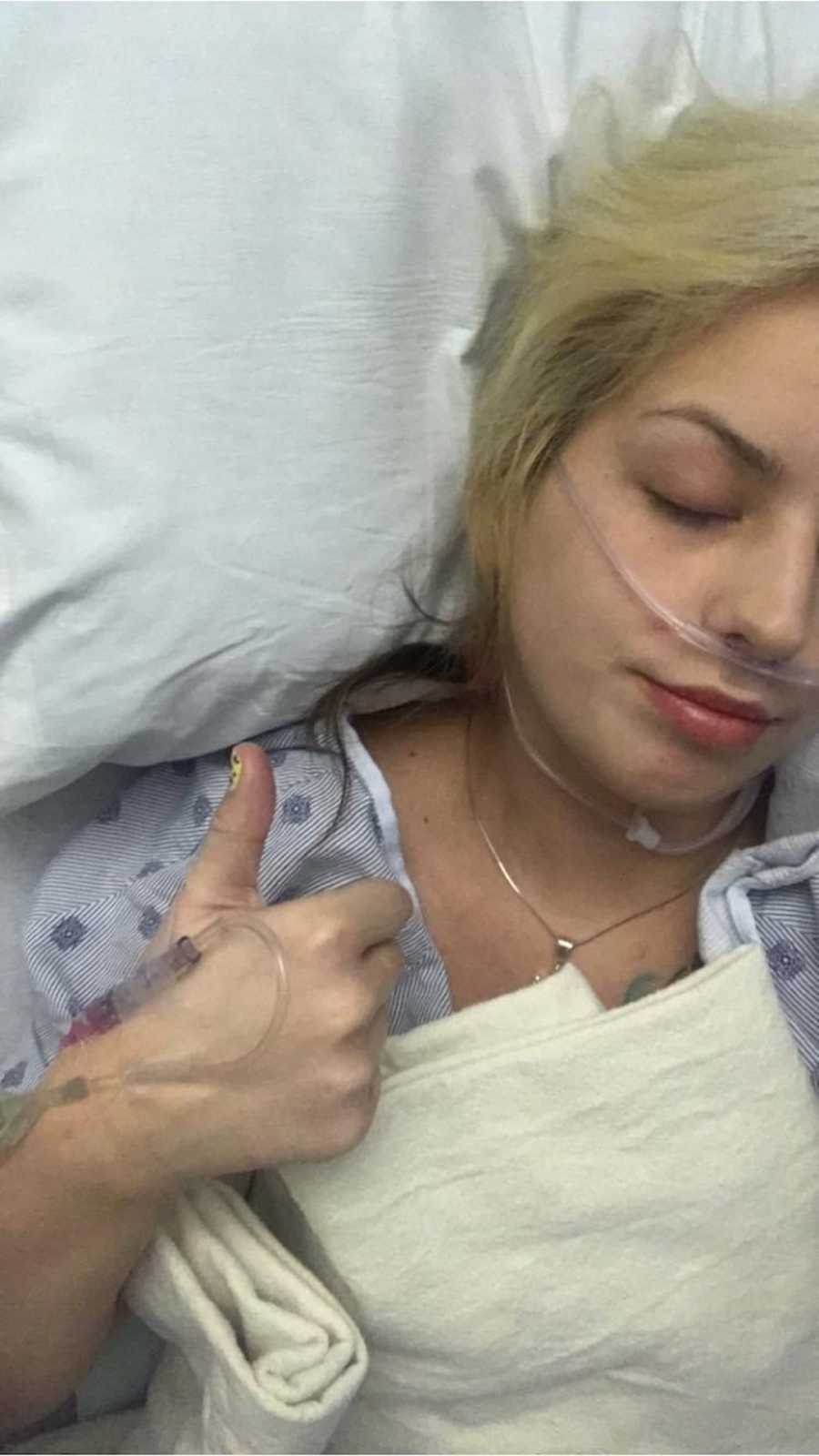
When I was discharged a few days later, I had a gut feeling that this wasn’t over. Ten days later, I was back in the hospital, nauseous, in pain, and terrified. Doctors were hesitant to operate again so soon, so I was admitted for monitoring and placed on heavy antibiotics. I went home after a few days, hopeful the infection would finally clear. It didn’t. Over the next three months, I lost 40 pounds. I couldn’t keep food down, couldn’t stand without dizziness, and even washing my hands made me weak. My mom became my full-time caregiver. I was being closely followed by a surgeon with repeated CT scans, and when it became clear that antibiotics weren’t working, another surgery was discussed.
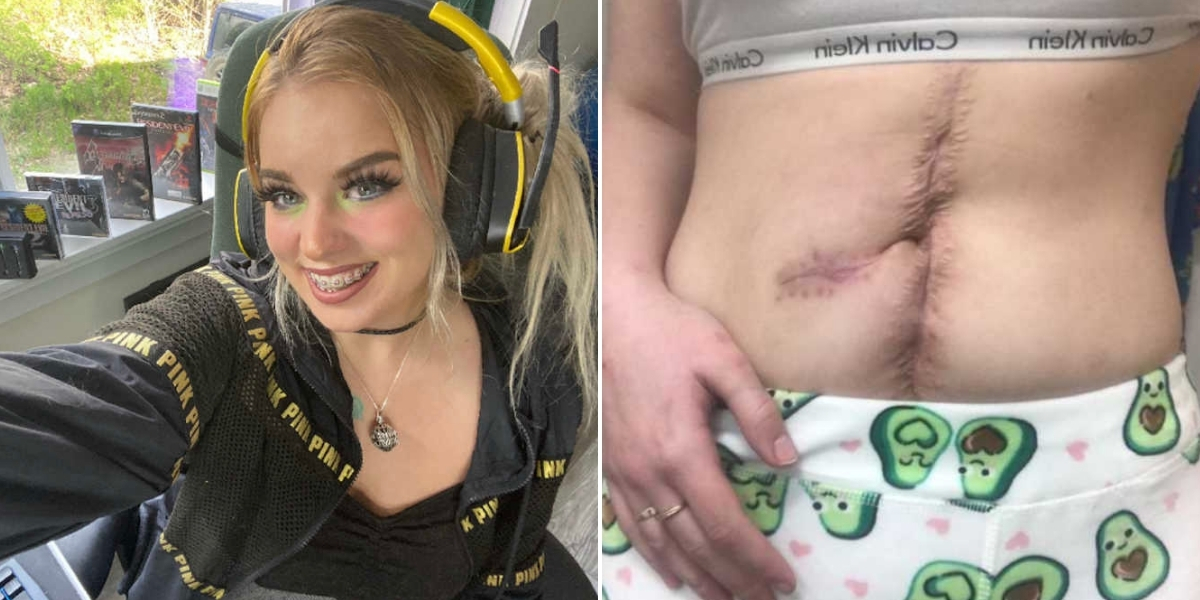
At the end of April 2018, I underwent my third major surgery in less than a year. Surgeons removed several more feet of my intestines, and to give my body time to heal, they performed an ileostomy, bringing part of my intestine through an opening in my abdomen. At 20 years old, I had a poo bag attached to me. Due to the severity of the infection, my right ovary and fallopian tube were also removed, leaving only my left tube, which had been damaged in the accident as well. I was embarrassed, exhausted, and sick—but I was no longer dying. That alone gave me hope.
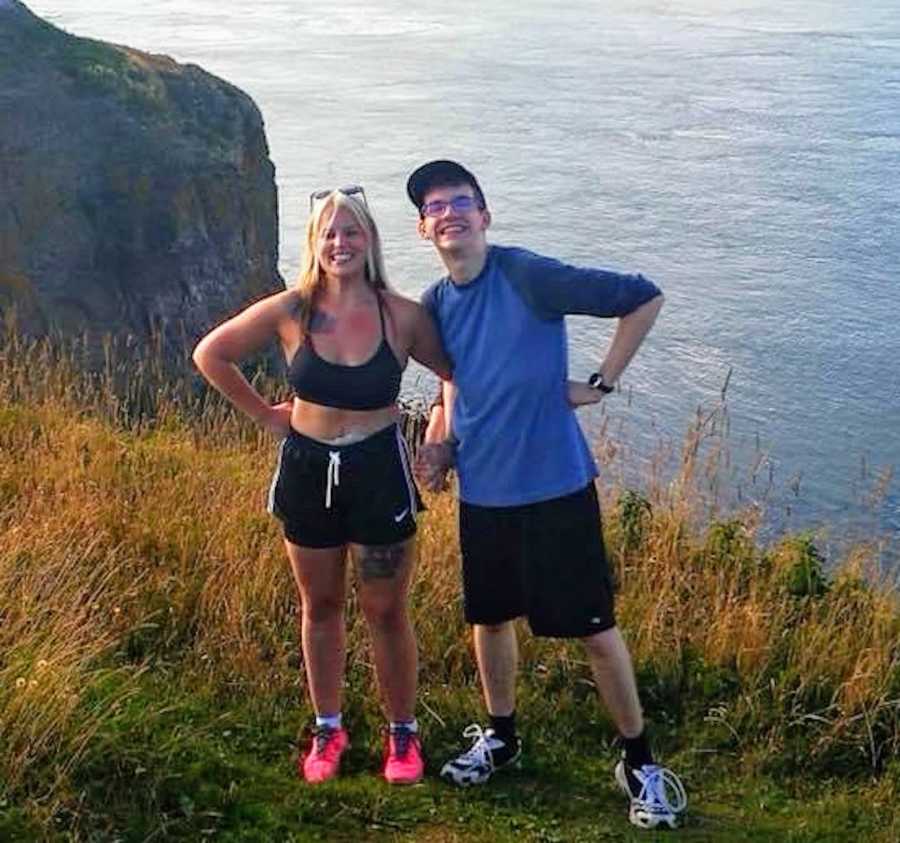
In November 2018, my ileostomy was reversed and my intestines were reattached. I never hid it from the world, because even though it wasn’t how I imagined my early 20s, that ileostomy saved my life. It was my final surgery. Since then, I’ve spent the last three years managing the aftermath—frequent ER visits for malnourishment, nutrient absorption issues, ongoing injections of B12, anemia, fatigue, chronic pain, and questions surrounding fertility. Despite everything, I worked toward a sense of normalcy, completing a one-year college program over two years, and I hope to return to university someday to pursue a bachelor’s degree and become a Naturopathic Doctor.
Over these years, I’ve felt everything—hopelessness, optimism, pain, grief, anger, love, gratitude, happiness, and deep sadness. Some days, I want to break down completely. But I haven’t stopped fighting to be the healthiest version of myself possible. I’ve seen countless specialists and therapists, advocated for my care, and continued pushing forward. Though nearly four years have passed, it still feels fresh because recovery has shaped my entire life. I put my social life on hold, but in doing so, I found the love of my life—myself. I’ve learned to stand tall, to advocate for my body, and to keep going, especially for my mom, who stayed by my side through everything.
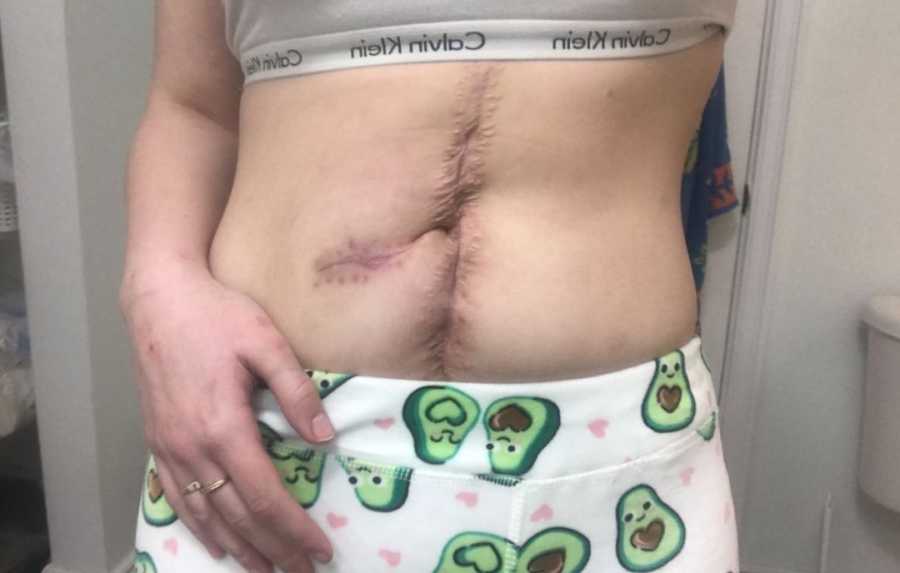
I’ve worked to reclaim my self-esteem by embracing my scars, even modeling and sharing them online to promote self-love. I began streaming video games on Twitch as an escape and a way to connect with others, and I created an Instagram account to openly share my medical journey. I talk about procedures, injections, therapies, and daily struggles in hopes of educating others and connecting with those who understand. Speaking out has helped me feel less alone and more supported.
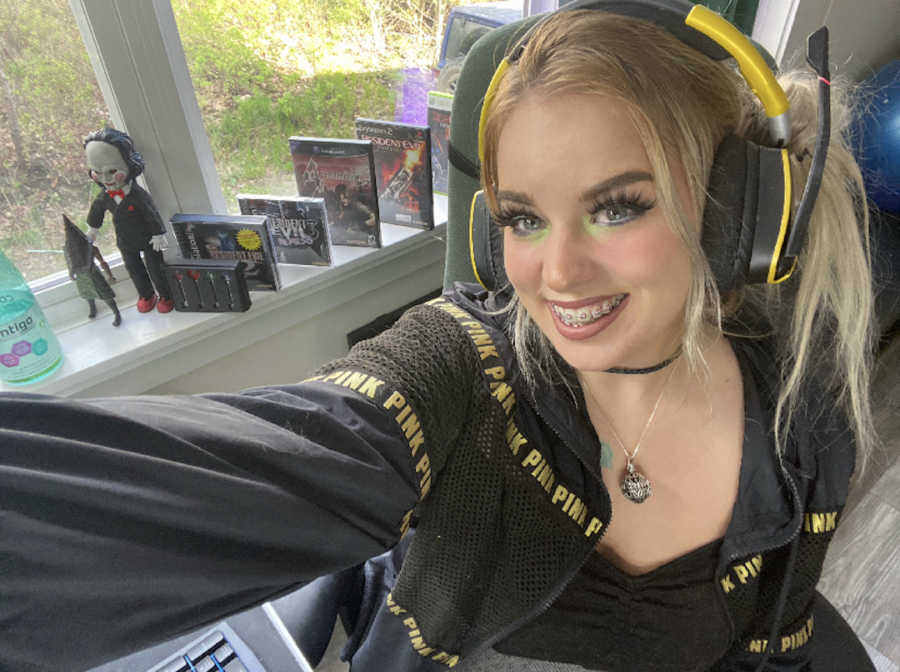
When I’m not focusing on my health or education, I volunteer at my local SPCA and wildlife rehabilitation center, Hope for Wildlife. I love being outdoors, camping, and spending time in nature with my boyfriend, who has been a constant support. If anyone reading this feels alone in their recovery, please know you aren’t. You can become you again—even if that version looks different. We’ve got this.
My 20s didn’t turn out how I expected. I just turned 24. I’ve had four surgeries, over five procedures, at least 17 CT scans, lost more than six feet of intestine, and endured countless blood tests. I didn’t think I’d survive past 2018—but here I am. Until the day this accident becomes a distant memory, I’ll keep fighting for answers, for health, and for happiness. And I’ll keep sharing my story, in hopes that it helps someone else feel seen, understood, and inspired.